



Microsoft Flight Simulator 1.0 vs Microsoft Flight Simulator 5.0
Side-by-side comparison of features, pricing, ratings, and alternatives.
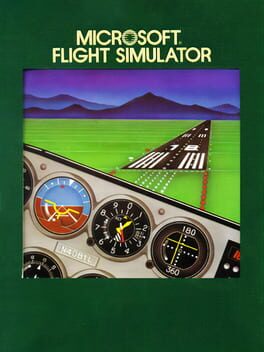
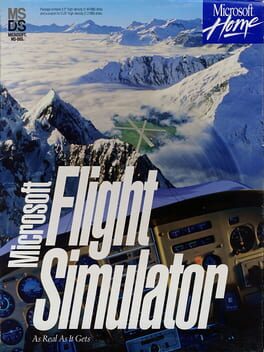
Microsoft Flight Simulator 1.0, released in 1982, was the first flight simulation from Microsoft and set a high bar for realism by meeting FAA regulations. It gives players full control of the aircraft's instrument panel, offering an authentic piloting experience. The game includes over 20 airports with varied terrain and is fully configurable for any skill level, making it accessible to both beginners and seasoned aviators seeking a nostalgic simulation.
Microsoft Flight Simulator 5.0 is the fifth installment of the iconic series, released for DOS in late 1993. It introduced SVGA graphics, texture mapping in select areas, and sound card support, bringing a more immersive experience to PC pilots. The release added two new flight regions—Paris and Munich—expanding the world for single‑player exploration. As the final DOS‑only version, it remains a nostalgic benchmark for flight simulation enthusiasts.
- FAA‑level instrument realism
- Wide selection of airports
- Highly configurable difficulty
- Historical significance
- SVGA graphics were cutting‑edge for its time.
- Adds new European regions for expanded exploration.
- Sound card support enhances immersion.
- Runs on low‑spec hardware and modern DOS emulators.
- Graphics are primitive by modern standards
- Limited to single-player only
- Runs only on legacy PC hardware
- Limited to single‑player mode.
- Graphics and textures are dated by modern standards.
- Runs only on DOS; no native support for current OSes.
More alternatives & similar tools
Alternatives to Microsoft Flight Simulator 1.0
View all →
A pioneering 1984 flight sim with expanded hardware support and deeper realism.
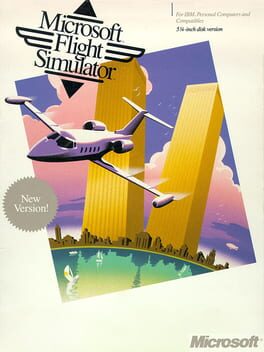
Classic DOS flight sim with SVGA graphics and new European scenery.
Alternatives to Microsoft Flight Simulator 5.0
View all →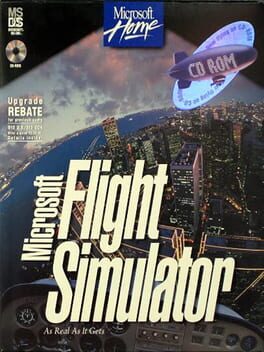
Experience realistic flight with satellite scenery and dynamic weather on classic DOS.
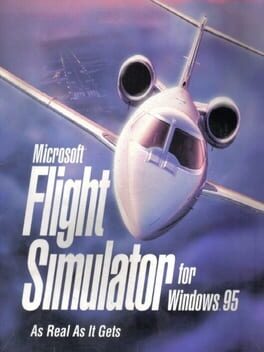
Fly the skies on Windows 95 with realistic planes and photo‑realistic satellite views.
The Verdict
AI-generated from listing dataIf you want the earliest, most authentic flight‑sim experience with FAA‑level instrument realism, go with 1.0; if you prefer sharper SVGA graphics, European scenery and sound support, choose 5.0.
Key differences
- •Graphics: 1.0 uses primitive 1980s visuals; 5.0 offers SVGA (800x600) with texture‑mapped terrain.
- •Scenery: 1.0 includes 20+ generic airports; 5.0 adds detailed Paris and Munich regions.
- •Audio: 1.0 has no sound card support; 5.0 can output engine and environmental sounds via a sound card.
- •Release era: 1.0 (1982) runs on legacy IBM PC hardware; 5.0 (1993) runs on DOS, usable on modern DOS emulators.
- •Instrument realism: 1.0 emphasizes FAA‑compliant instrument panels; 5.0’s focus is visual upgrades rather than instrument depth.
Gameplay & fun factor
1.0’s FAA‑level instrument panel offers deeper simulation for enthusiasts, despite primitive graphics.
Platform availability
5.0 runs on DOS and modern DOS emulators; 1.0 requires original 1980s IBM PC hardware.
Price & value
Both are one‑time paid titles; no price details differ in the provided facts.
Multiplayer / co‑op
Both are single‑player only.
Content & replayability
5.0 adds specific European scenery (Paris, Munich) and sound, expanding variety beyond 1.0’s generic airports.
Difficulty & accessibility
1.0 offers highly configurable instrument sensitivity and difficulty levels for novice to expert pilots.
Graphics & performance
5.0 supports SVGA up to 800x600 with texture mapping; 1.0’s graphics are primitive by modern standards.
Choose Microsoft Flight Simulator 1.0 if…
Aviation purist seeking authentic instrument realism and willing to run on legacy PC hardware.
Choose Microsoft Flight Simulator 5.0 if…
Player wanting better visuals, European scenery, and sound while using DOS or emulators.
Common questions
Can I run either game on a modern Windows PC?
1.0 requires original IBM PC hardware; 5.0 runs on DOS and can be used via modern DOS emulators.
Which version has more realistic flight physics?
Both claim realistic physics; 1.0 emphasizes FAA‑level instrument realism, while 5.0 focuses on visual upgrades.
Do either of the games support multiplayer?
No; both are single‑player only according to the specifications.