



Microsoft Flight Simulator 4.0 vs Microsoft Flight Simulator 5.0
Side-by-side comparison of features, pricing, ratings, and alternatives.
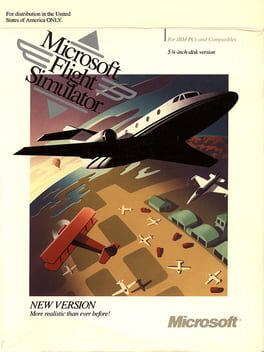
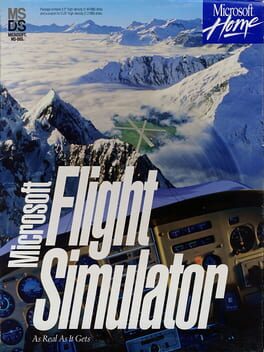
Microsoft Flight Simulator 4.0 brings early digital aviation to life with detailed scenery for five major U.S. cities, including New York and Los Angeles. It supports CGA through VGA graphics and offers multi-user play for shared experiences. The version also integrates add‑on support such as Microsoft's Aircraft & Scenery Designer and Sublogic's USA scenery series, expanding the simulation's depth for hobbyists and aspiring pilots.
Microsoft Flight Simulator 5.0 is the fifth installment of the iconic series, released for DOS in late 1993. It introduced SVGA graphics, texture mapping in select areas, and sound card support, bringing a more immersive experience to PC pilots. The release added two new flight regions—Paris and Munich—expanding the world for single‑player exploration. As the final DOS‑only version, it remains a nostalgic benchmark for flight simulation enthusiasts.
- Authentic retro graphics and sound.
- Rich city scenery for five major locations.
- Extensible with add‑ons and custom content.
- Supports both single-player and multi-user modes.
- SVGA graphics were cutting‑edge for its time.
- Adds new European regions for expanded exploration.
- Sound card support enhances immersion.
- Runs on low‑spec hardware and modern DOS emulators.
- Limited to DOS/PC hardware of its time.
- No modern graphics or VR support.
- Multiplayer requires manual setup.
- Limited to single‑player mode.
- Graphics and textures are dated by modern standards.
- Runs only on DOS; no native support for current OSes.
More alternatives & similar tools
Alternatives to Microsoft Flight Simulator 4.0
View all →
A pioneering 1984 flight sim with expanded hardware support and deeper realism.
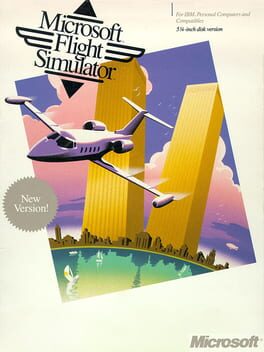
Classic DOS flight sim with SVGA graphics and new European scenery.
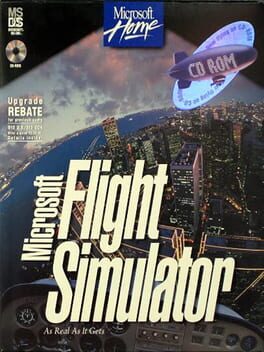
Experience realistic flight with satellite scenery and dynamic weather on classic DOS.
Alternatives to Microsoft Flight Simulator 5.0
View all →Experience realistic flight with satellite scenery and dynamic weather on classic DOS.
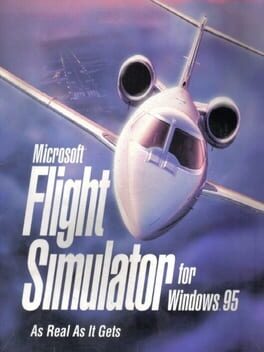
Fly the skies on Windows 95 with realistic planes and photo‑realistic satellite views.
The Verdict
AI-generated from listing dataBoth are retro DOS flight sims, but 4.0 offers multi‑user play and five US city scenes, while 5.0 adds SVGA graphics and European scenery but is single‑player only.
Key differences
- •4.0 supports multi‑user sessions; 5.0 is single‑player only.
- •5.0 provides higher‑resolution SVGA graphics (up to 800x600) versus 4.0’s CGA/EGA/VGA limits.
- •Geographic focus: 4.0 covers five major US cities; 5.0 adds Paris and Munich in Europe.
- •5.0 includes optional sound‑card audio; 4.0 mentions only retro sound.
- •Release dates: 4.0 (1989) is older than 5.0 (1993), affecting hardware compatibility and feature set.
Gameplay & fun factor
Both deliver era‑appropriate flight physics; choice hinges on preference for multiplayer vs. higher graphics.
Platform availability
Both run on DOS, but 4.0’s older hardware requirements may be easier for legacy PCs.
Price & value
Both are one‑time paid products; no price data given, so value is equal.
Multiplayer / co‑op
4.0 explicitly supports multi‑user play; 5.0 is limited to single‑player.
Content & replayability
5.0 adds European scenery (Paris, Munich) and texture mapping, expanding exploration beyond 4.0’s US cities.
Difficulty & accessibility
Both target aviation enthusiasts with similar era‑level complexity; no differentiating data.
Graphics & performance
5.0 supports SVGA up to 800x600 and texture mapping; 4.0 limited to CGA/EGA/VGA.
Choose Microsoft Flight Simulator 4.0 if…
Buyers who want multiplayer and US city scenery on very low‑spec hardware.
Choose Microsoft Flight Simulator 5.0 if…
Buyers who prioritize sharper graphics, European locations, and sound‑card audio.
Common questions
Can I play either game on modern Windows?
Both run only on DOS; you would need a DOS emulator (e.g., DOSBox) on current OSes.
Which version supports multiplayer?
Microsoft Flight Simulator 4.0 includes multi‑user play; 5.0 is single‑player only.
Do either of them support higher‑resolution graphics?
Version 5.0 supports SVGA up to 800x600 with texture mapping; 4.0 maxes out at VGA/EGA.