



Microsoft Flight Simulator 2.0 vs Microsoft Flight Simulator 4.0
Side-by-side comparison of features, pricing, ratings, and alternatives.
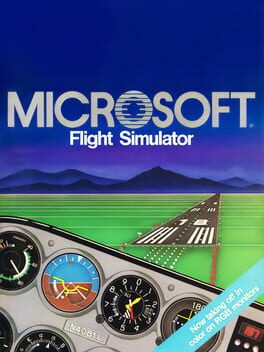
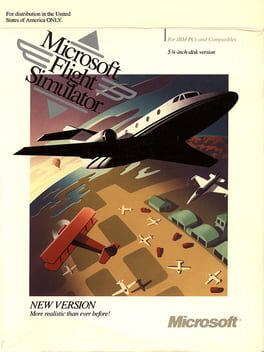
Microsoft Flight Simulator 2.0 built on the foundation of its predecessor, adding more sophisticated simulation variables and broader hardware compatibility for the era. It delivered a richer flying experience on early personal computers, letting enthusiasts explore realistic flight dynamics and instrument panels. Despite its vintage graphics, the title set standards for future simulators with its attention to detail and extensibility, making it a landmark in the evolution of flight simulation software.
Microsoft Flight Simulator 4.0 brings early digital aviation to life with detailed scenery for five major U.S. cities, including New York and Los Angeles. It supports CGA through VGA graphics and offers multi-user play for shared experiences. The version also integrates add‑on support such as Microsoft's Aircraft & Scenery Designer and Sublogic's USA scenery series, expanding the simulation's depth for hobbyists and aspiring pilots.
- Pioneering simulation depth for its time
- Broad hardware peripheral support
- Extensible configuration files
- Influential legacy in later flight sims
- Authentic retro graphics and sound.
- Rich city scenery for five major locations.
- Extensible with add‑ons and custom content.
- Supports both single-player and multi-user modes.
- Primitive graphics by modern standards
- Limited global scenery and airports
- Runs only on legacy PC hardware
- Limited to DOS/PC hardware of its time.
- No modern graphics or VR support.
- Multiplayer requires manual setup.
More alternatives & similar tools
Alternatives to Microsoft Flight Simulator 2.0
View all →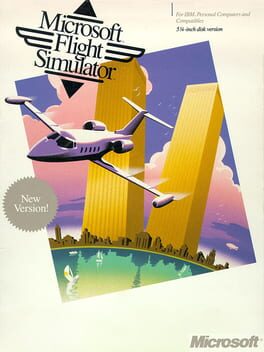
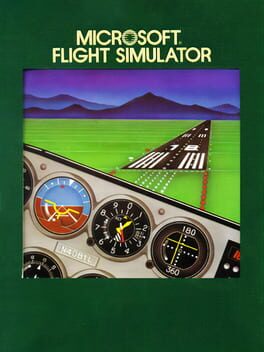
Classic 1982 flight sim meeting FAA standards with full instrument control.
Alternatives to Microsoft Flight Simulator 4.0
View all →A pioneering 1984 flight sim with expanded hardware support and deeper realism.
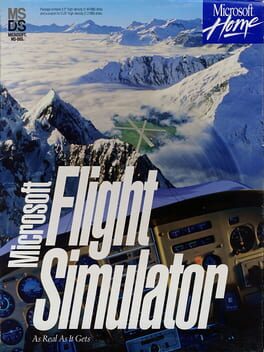
Classic DOS flight sim with SVGA graphics and new European scenery.
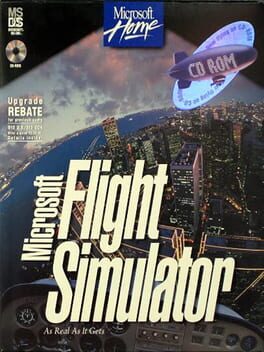
Experience realistic flight with satellite scenery and dynamic weather on classic DOS.
The Verdict
AI-generated from listing dataBoth are historic flight sims, but Flight Simulator 4.0 offers richer city scenery and VGA graphics, while 2.0 provides deeper early‑era realism and broader peripheral support.
Key differences
- •Graphics: 4.0 supports CGA‑VGA (up to EGA resolution); 2.0 limited to primitive 1984 graphics.
- •Scenery coverage: 4.0 includes detailed city scenery for five major US locations; 2.0 has only basic terrain and airport outlines.
- •Hardware support: 2.0 emphasizes wide joystick/rudder pedal and multi‑monitor setups; 4.0 runs on late‑1980s DOS PCs with standard VGA.
- •Release era: 4.0 (1989) is newer, offering slightly more advanced flight physics for its time; 2.0 (1984) is earlier with pioneering simulation depth.
- •Multiplayer: Both list single‑player only, but 4.0 mentions a manual multi‑user mode; 2.0 has no multiplayer capability.
Gameplay & fun factor
4.0 adds city scenery and multi‑user play, giving more visual variety and social options.
Platform availability
2.0 supports a wider range of joysticks, rudder pedals, and multi‑monitor setups, increasing hardware flexibility.
Price & value
Both are one‑time paid titles; no price differences are specified.
Multiplayer / co‑op
4.0 mentions a manual multi‑user mode; 2.0 is strictly single‑player.
Content & replayability
4.0 includes detailed scenery for five major cities and is extensible via add‑ons and custom content.
Difficulty & accessibility
2.0’s deeper aerodynamic model and configurable files may appeal to hobbyists seeking realism.
Graphics & performance
4.0 supports VGA/EGA graphics, a clear step up from 2.0’s primitive early‑80s visuals.
Choose Microsoft Flight Simulator 2.0 if…
Buyers who prioritize early‑era realism, extensive peripheral support, and configurable flight parameters.
Choose Microsoft Flight Simulator 4.0 if…
Buyers who want better visuals, city scenery, and optional multiplayer on classic DOS hardware.
Common questions
Do either of these games run on modern Windows or require DOS emulation?
Both were released for DOS PCs in the 1980s; running them today would need DOS emulation (e.g., DOSBox).
Is multiplayer possible in either title?
Only Flight Simulator 4.0 mentions a manual multi‑user mode; 2.0 is single‑player only.
Which offers more detailed scenery?
Flight Simulator 4.0 provides detailed city scenery for New York, Seattle, San Francisco, Los Angeles, and more.