



Microsoft Flight Simulator 2.0 vs Microsoft Flight Simulator 3.0
Side-by-side comparison of features, pricing, ratings, and alternatives.
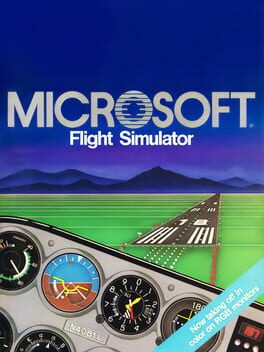
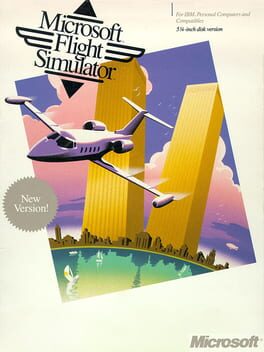
Microsoft Flight Simulator 2.0 built on the foundation of its predecessor, adding more sophisticated simulation variables and broader hardware compatibility for the era. It delivered a richer flying experience on early personal computers, letting enthusiasts explore realistic flight dynamics and instrument panels. Despite its vintage graphics, the title set standards for future simulators with its attention to detail and extensibility, making it a landmark in the evolution of flight simulation software.
Microsoft Flight Simulator 3.0 builds on the legacy of its predecessors by adding a variety of new aircraft, expanded airport selections, and additional global locations. The game delivers a richer flying experience while retaining the single‑player focus that fans love. Developed by subLOGIC and published by Microsoft in 1988, this version offers improved graphics and more realistic flight physics, making it a timeless choice for aviation enthusiasts seeking a deeper simulation.
- Pioneering simulation depth for its time
- Broad hardware peripheral support
- Extensible configuration files
- Influential legacy in later flight sims
- Wide variety of new aircraft
- Expanded airport selection
- Improved visual detail for its era
- Accurate flight physics
- Primitive graphics by modern standards
- Limited global scenery and airports
- Runs only on legacy PC hardware
- Limited to single‑player only
- Outdated graphics by modern standards
- Runs only on older PC hardware
More alternatives & similar tools
Alternatives to Microsoft Flight Simulator 2.0
View all →
Classic 1982 flight sim meeting FAA standards with full instrument control.
Alternatives to Microsoft Flight Simulator 3.0
View all →A pioneering 1984 flight sim with expanded hardware support and deeper realism.
Classic 1982 flight sim meeting FAA standards with full instrument control.
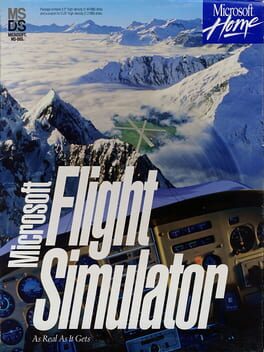
Classic DOS flight sim with SVGA graphics and new European scenery.
The Verdict
AI-generated from listing dataMicrosoft Flight Simulator 3.0 offers more aircraft, airports, and better graphics for a modest price, while 2.0 is older, cheaper (price not listed) and focuses on peripheral support.
Key differences
- •3.0 adds new aircraft models and more detailed airports; 2.0 has fewer planes and simpler scenery.
- •Graphics: 3.0 upgraded visual detail for its era; 2.0 primitive by modern standards.
- •Hardware support: 2.0 emphasizes wide joystick/rudder pedal and multi‑monitor compatibility; 3.0 does not mention these.
- •Release date and price: 3.0 released 1988 with a listed MSRP of $49.99; 2.0 released 1984 with no price given.
- •Both are single‑player only, but 3.0 includes more varied flight routes and locations.
Gameplay & fun factor
3.0 provides more aircraft, airports, and varied routes, increasing variety over 2.0.
Platform availability
Both run only on older PC hardware; no modern platform info for either.
Price & value
2.0 price not specified; 3.0 costs $49.99, making 2.0 potentially cheaper.
Multiplayer / co‑op
Both are single‑player only.
Content & replayability
3.0 adds more aircraft, airports, and geographic locations, offering longer replay value.
Difficulty & accessibility
2.0’s extensive peripheral support may aid realism for enthusiasts; 3.0 lacks such detail.
Graphics & performance
3.0 features upgraded graphics and better terrain detail compared with 2.0’s primitive visuals.
Choose Microsoft Flight Simulator 2.0 if…
Buyers focused on legacy hardware support and peripheral flexibility, or seeking the cheapest option.
Choose Microsoft Flight Simulator 3.0 if…
Buyers wanting more planes, airports, and better visuals, willing to pay $49.99.
Common questions
What is the cost of each simulator?
3.0 costs $49.99; 2.0 price is not listed in the provided facts.
Do either of them support multiplayer?
Both are single‑player only.
Which version has more aircraft and airports?
3.0 adds several new aircraft models and a larger set of detailed airports.