



Dear Esther vs Gone Home
Side-by-side comparison of features, pricing, ratings, and alternatives.
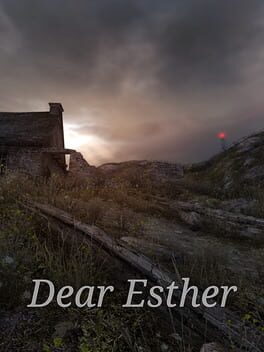
Dear Esther immerses you in a remote, windswept island where a disembodied voice recites fragments of a letter to a woman named Esther. The game abandons traditional mechanics, focusing instead on atmospheric exploration and a haunting soundtrack that guides the emotional journey. As you wander cliffs, tunnels, and beaches, the story of love, loss, and guilt unfolds through poetic narration, making each walk a unique, introspective experience.
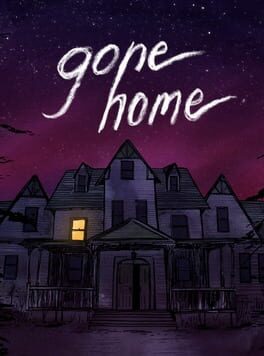
Gone Home is a first-person interactive exploration simulator developed by The Fullbright Company. Players step into the shoes of Katie, a university student returning from abroad to her family's newly inherited Oregon house in June 1995, only to find it completely deserted. As you navigate the richly detailed environment, you examine everyday objects, unlocked doors, notes, and cassette tapes to piece together the emotional story of your family's lives and discover what happened to your younger sister, Sam.
- Deeply immersive atmosphere
- Beautifully composed soundtrack
- Thought‑provoking narrative
- Cross‑platform availability
- Deeply immersive and authentic 1995 atmosphere
- Compelling environmental storytelling that rewards curiosity
- Emotional and memorable narrative payoff
- Intuitive and naturalistic object interaction mechanics
- No traditional gameplay may deter some players
- Linear progression can feel passive
- Limited replay value after story is known
- Short runtime relative to standard AAA games
- Very limited replay value once the mystery is solved
- Minimal traditional puzzle gameplay or challenge
More alternatives & similar tools
Alternatives to Dear Esther
View all →

Alternatives to Gone Home
View all →

A horrifying first-person journey into greed, power, and madness in 1899.
The Verdict
AI-generated from listing dataBoth are single‑player narrative exploration games, but Gone Home offers a richer 1995 house setting with light puzzles, while Dear Esther focuses on poetic storytelling on an open island with no puzzles.
Key differences
- •Setting: Gone Home is an interior 1995 house; Dear Esther is an outdoor island.
- •Gameplay: Gone Home includes simple environmental puzzles; Dear Esther has none.
- •Audio: Gone Home uses period objects and cassette recordings; Dear Esther relies on a narrated letter and adaptive ambient music.
- •Release year and critic scores: Gone Home (2013, 74) slightly newer and higher‑scored than Dear Esther (2012, 72).
- •Platform notes: Dear Esther mentions ultra‑wide and VR support; Gone Home does not specify such features.
Gameplay & fun factor
Gone Home adds light puzzles and interactive objects, giving more active engagement than Dear Esther's pure walk‑through.
Platform availability
Dear Esther explicitly supports ultra‑wide and VR displays, offering broader hardware options than Gone Home.
Price & value
Both are paid one‑time titles; no price listed for Dear Esther, but Gone Home costs $14.99.
Multiplayer / co‑op
Both are single‑player only.
Content & replayability
Gone Home’s puzzles and hidden objects give slightly more incentive to revisit than Dear Esther’s linear narrative.
Difficulty & accessibility
Dear Esther has no puzzles, making it more accessible for players seeking a purely passive experience.
Graphics & performance
Dear Esther highlights high‑fidelity island rendering, dynamic lighting, and VR support, suggesting higher visual ambition.
Choose Dear Esther if…
Players who prefer pure atmospheric storytelling with high‑end visuals and optional VR.
Choose Gone Home if…
Players who want a short, puzzle‑light story set in a detailed indoor environment.
Common questions
Which game is cheaper?
Gone Home is listed at $14.99; Dear Esther’s price is not specified in the provided data.
Do either of the games have combat?
Both games have no combat; they focus on exploration and narrative.
Is there any replay value after finishing the story?
Gone Home offers limited replay value through hidden objects; Dear Esther offers minimal replay value due to its linear, narrative‑only design.