



Datadog vs New Relic
Side-by-side comparison of features, pricing, ratings, and alternatives.
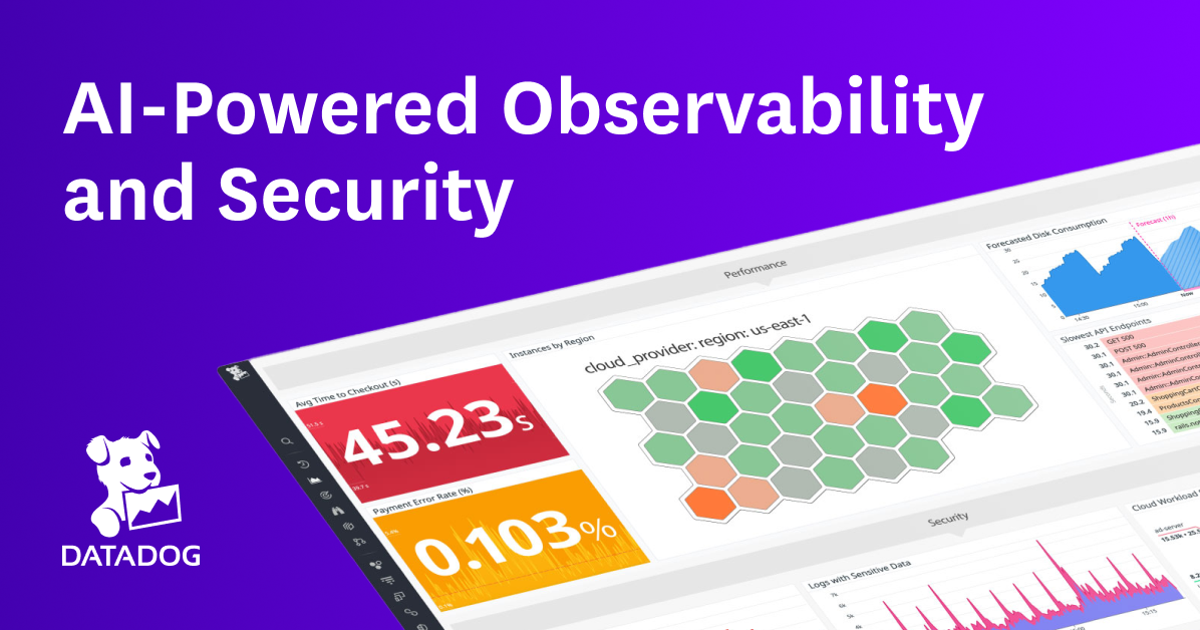

Datadog is a cloud‑based observability platform that provides monitoring of servers, containers, databases, and services. It aggregates metrics, traces, and logs into a single pane. The service offers real‑time dashboards, AI‑driven alerts, and integrations with major cloud providers, helping teams troubleshoot performance issues and ensure reliability.
New Relic provides a unified view of application performance, infrastructure health, logs, and user experience. It helps teams detect issues fast, understand root causes, and improve reliability across distributed systems. The platform integrates with major cloud providers, container orchestrators, and development tools, offering real‑time metrics, distributed tracing, and AI‑driven anomaly detection to support proactive monitoring and rapid incident response.
- Comprehensive integration library
- Unified view of metrics, logs, and traces
- Scalable SaaS architecture with minimal maintenance
- Advanced AI alerts reduce noise
- Unified view of metrics, logs, and traces
- Strong integrations with major cloud platforms
- AI‑powered anomaly detection reduces noise
- Generous free tier for small teams
- Pricing can become expensive at scale
- Learning curve for complex dashboard configurations
- Limited on‑premises deployment options
- Advanced features can become costly at scale
- Steeper learning curve for complex configurations
- Custom query language may require training
More alternatives & similar tools
Alternatives to Datadog
View all →


Alternatives to New Relic
View all →Full-stack observability with an AI SRE agent that detects, diagnoses, and fixes production issues automatically.
The Verdict
AI-generated from listing dataBoth offer full‑stack observability with free tiers, but New Relic is open‑source and slightly cheaper at scale, while Datadog provides richer support and a larger integration library.
Key differences
- •Open source: New Relic is open source; Datadog is not.
- •Support: Datadog includes phone and 24/7 support; New Relic offers only email, live chat, and community forum.
- •Integration breadth: Datadog claims metrics from over 450 integrations versus New Relic’s unspecified count.
- •Learning curve: New Relic’s custom query language may require training; Datadog’s dashboards also have a learning curve but no specific query language mentioned.
- •Pricing scalability: Both are freemium, but both note that advanced features can become costly at scale; no concrete price differences are given.
Pricing & value
Both use a freemium model and warn that costs rise with advanced usage; no price details to differentiate.
Ease of use / learning curve
New Relic mentions a steeper learning curve for complex configs and a custom query language requiring training.
Features & depth
Both provide metrics, logs, traces, AI anomaly detection, and custom dashboards; feature lists are comparable.
Integrations & ecosystem
Datadog explicitly cites over 450 integrations; New Relic’s integration count is not specified.
Collaboration
Both integrate with Slack and PagerDuty for alerts and incident management.
Scalability
Both are cloud SaaS platforms designed for enterprise‑scale workloads.
Support
Datadog offers phone and 24/7 support; New Relic provides only email, live chat, and community forum.
Choose Datadog if…
Teams needing extensive integrations and round‑the‑clock phone support, and willing to pay for premium services.
Choose New Relic if…
Enterprises that value open‑source tooling, prefer a generous free tier, and can manage with community support.
Common questions
Is there a cost difference for large‑scale deployments?
Both vendors state that advanced features become costly at scale; no specific pricing details are provided.
Which platform offers more integrations out of the box?
Datadog lists over 450 integrations; New Relic’s integration count is not specified.
What support options are available for critical incidents?
Datadog provides email, live chat, phone, and 24/7 support; New Relic offers email, live chat, and a community forum.