



Datadog vs OpenObserve
Side-by-side comparison of features, pricing, ratings, and alternatives.
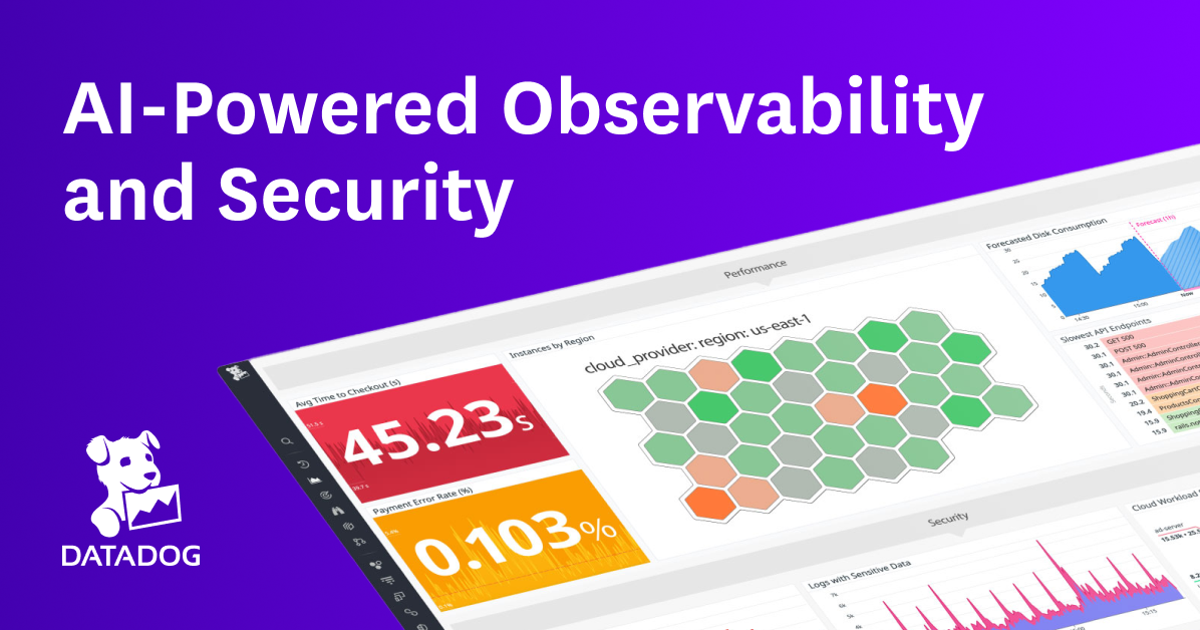

Datadog is a cloud‑based observability platform that provides monitoring of servers, containers, databases, and services. It aggregates metrics, traces, and logs into a single pane. The service offers real‑time dashboards, AI‑driven alerts, and integrations with major cloud providers, helping teams troubleshoot performance issues and ensure reliability.
OpenObserve is a lightweight, open‑source platform that consolidates logs, metrics, and traces into a single searchable store. It offers a cost‑efficient alternative to Elasticsearch, making high‑volume data ingestion affordable for teams of any size. The solution provides real‑time querying, customizable dashboards, and native integrations with popular monitoring tools, enabling DevOps and SRE teams to gain full visibility into their infrastructure without vendor lock‑in.
- Comprehensive integration library
- Unified view of metrics, logs, and traces
- Scalable SaaS architecture with minimal maintenance
- Advanced AI alerts reduce noise
- Free and open‑source with no license fees
- Low storage cost compared to Elasticsearch
- Unified platform for logs, metrics, and traces
- Easy self‑hosted deployment on Kubernetes or VM
- Pricing can become expensive at scale
- Learning curve for complex dashboard configurations
- Limited on‑premises deployment options
- Smaller community and ecosystem than Elasticsearch
- Built‑in visualisation features are less extensive than commercial rivals
- Enterprise‑grade features are still evolving
More alternatives & similar tools
Alternatives to Datadog
View all →


Alternatives to OpenObserve
View all →
The Verdict
AI-generated from listing dataDatadog offers a comprehensive, enterprise‑grade SaaS observability platform with deep integrations but higher cost, while OpenObserve provides a free, open‑source, self‑hosted solution with lower storage overhead and fewer integrations.
Key differences
- •Datadog includes AI‑powered anomaly detection and built‑in incident management; OpenObserve relies on community features.
- •Datadog’s integration library covers 450+ services; OpenObserve focuses on Grafana, Prometheus, Loki, OpenTelemetry.
- •Pricing model: Datadog freemium can become expensive at scale; OpenObserve is free and open‑source.
- •Deployment: Datadog is SaaS only; OpenObserve is self‑hosted on Kubernetes or bare‑metal.
- •Support: Datadog offers 24/7 phone/email/live chat; OpenObserve provides community‑forum support only.
Pricing & value
OpenObserve is free and open‑source; Datadog’s SaaS can become expensive as usage grows.
Ease of use / learning curve
OpenObserve advertises easy self‑hosted deployment and built‑in Grafana‑compatible dashboards; Datadog has a noted learning curve for complex dashboards.
Features & depth
Datadog provides AI alerts, distributed tracing, incident management, and 450+ integrations; OpenObserve’s feature set is still evolving.
Integrations & ecosystem
Datadog lists integrations with AWS, Azure, GCP, Kubernetes, Slack, GitHub and many more; OpenObserve lists only a few core integrations.
Collaboration
Both support team collaboration: Datadog via Slack/PagerDuty incident routing; OpenObserve via multi‑tenant isolation.
Scalability
Datadog’s SaaS architecture scales automatically; OpenObserve requires self‑managed scaling on Kubernetes or bare‑metal.
Support
Datadog offers 24/7 phone, email, live chat; OpenObserve only provides community forum and GitHub issues.
Choose Datadog if…
Enterprises needing extensive integrations, AI alerts, and 24/7 professional support, and willing to pay for SaaS.
Choose OpenObserve if…
Budget‑conscious DevOps/SRE teams that prefer open‑source, self‑hosted control and lower storage costs.
Common questions
What are the total cost implications?
Datadog starts free but adds charges per host/metric and can become expensive at scale; OpenObserve has no license fees.
Can I run the platform on‑premises?
Datadog is SaaS‑only; OpenObserve can be self‑hosted on Kubernetes or bare‑metal via Helm charts.
Which tool offers more integrations?
Datadog lists over 450 integrations (AWS, Azure, GCP, Kubernetes, Slack, GitHub, etc.); OpenObserve integrates primarily with Grafana, Prometheus, Loki, OpenTelemetry.