



Datadog vs Honeycomb
Side-by-side comparison of features, pricing, ratings, and alternatives.
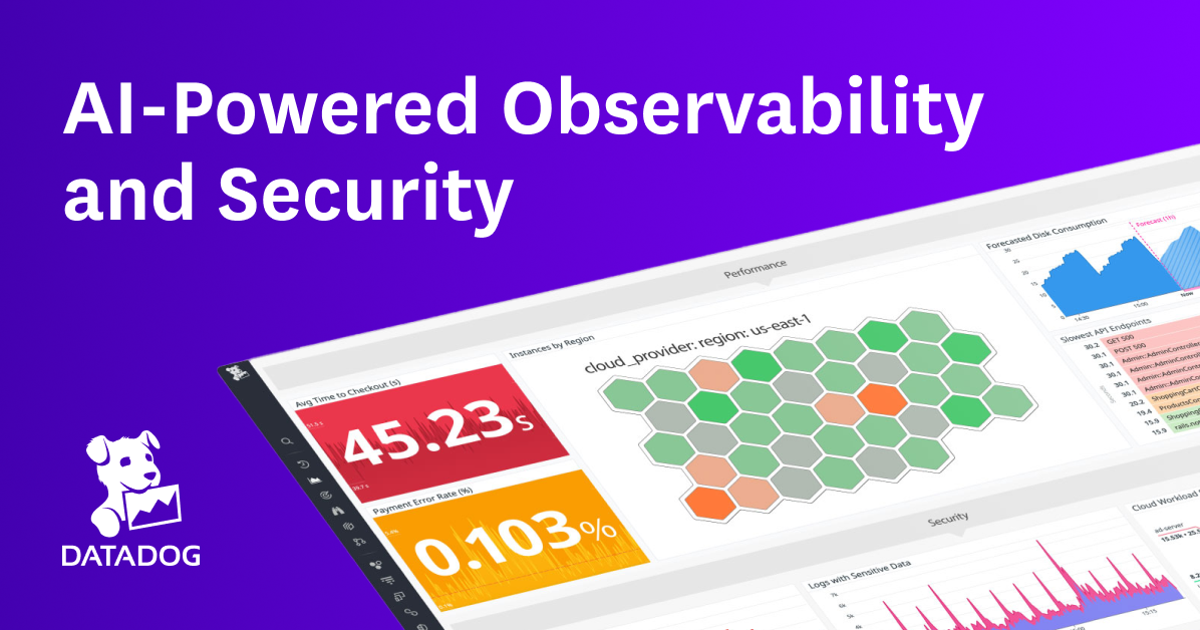
Datadog is a cloud‑based observability platform that provides monitoring of servers, containers, databases, and services. It aggregates metrics, traces, and logs into a single pane. The service offers real‑time dashboards, AI‑driven alerts, and integrations with major cloud providers, helping teams troubleshoot performance issues and ensure reliability.
Honeycomb is an observability platform built around wide structured events and high-cardinality querying, letting engineering teams trace and debug complex production issues in modern distributed systems. It provides a comprehensive view of system performance and behavior, enabling teams to quickly identify and resolve issues.
- Comprehensive integration library
- Unified view of metrics, logs, and traces
- Scalable SaaS architecture with minimal maintenance
- Advanced AI alerts reduce noise
- Comprehensive system monitoring and performance optimization
- High-cardinality querying for quick issue resolution
- Real-time analytics for immediate insights
- Customizable dashboards for tailored system monitoring
- Pricing can become expensive at scale
- Learning curve for complex dashboard configurations
- Limited on‑premises deployment options
- Steep learning curve for new users
- Limited support for legacy systems
- Requires significant resources for large-scale deployments
More alternatives & similar tools
Alternatives to Datadog
View all →



Alternatives to Honeycomb
View all →
The Verdict
AI-generated from listing dataDatadog offers a broader, integrated observability suite with a freemium entry and extensive integrations, while Honeycomb focuses on high‑cardinality querying and deep debugging for teams that can handle a steeper learning curve.
Key differences
- •Datadog includes built‑in log management and AI‑driven anomaly alerts; Honeycomb does not mention logs or AI alerts.
- •Honeycomb emphasizes high‑cardinality event querying and real‑time analytics, a specialty not highlighted for Datadog.
- •Datadog provides a much larger integration ecosystem (450+ integrations) versus Honeycomb’s more limited list.
- •Pricing model differs: Datadog offers a freemium tier; Honeycomb is a paid subscription only.
- •Incident‑response integrations (Slack, PagerDuty) are explicit for Datadog, while Honeycomb does not list comparable features.
Pricing & value
Datadog offers a freemium tier, giving low‑cost entry; Honeycomb is only paid subscription.
Ease of use / learning curve
Both note steep learning curves—Datadog for complex dashboards, Honeycomb for high‑cardinality queries.
Features & depth
Datadog covers metrics, logs, tracing, AI alerts; Honeycomb focuses on tracing and high‑cardinality queries only.
Integrations & ecosystem
Datadog lists 450+ integrations (AWS, Azure, GCP, Kubernetes, Slack, GitHub); Honeycomb lists five core platforms.
Collaboration
Datadog includes incident management with Slack, PagerDuty, email; Honeycomb provides no comparable collaboration tools.
Scalability
Datadog advertises scalable SaaS architecture; Honeycomb notes significant resource needs for large deployments.
Support
Both offer 24/7 phone, email, and live‑chat support.
Choose Datadog if…
Enterprises or DevOps teams needing unified metrics, logs, traces, and broad integrations, with budget flexibility.
Choose Honeycomb if…
Engineering teams prioritizing deep, high‑cardinality debugging and real‑time analytics, willing to invest in learning.
Common questions
Can I start using Datadog for free?
Yes, Datadog offers a freemium tier; Honeycomb requires a paid subscription.
Which platform supports more out‑of‑the‑box integrations?
Datadog, with over 450 integrations, versus Honeycomb’s limited list (Kubernetes, Docker, AWS, GCP, Azure).
Do both tools provide log management?
Datadog includes log ingestion, parsing, and indexing; Honeycomb does not mention log management.