



Saikyou Habu Shogi vs Sega Mahjong
Side-by-side comparison of features, pricing, ratings, and alternatives.
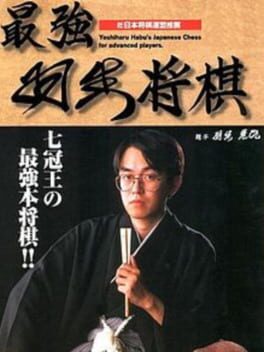
Saikyou Habu Shogi brings the traditional Japanese board game of shogi to the console world, offering authentic rules and strategic depth. Originally a launch title for the Nintendo 64, it showcases the early 3D capabilities of the system while staying true to the classic gameplay. Developed and published by SETA, the game provides a single-player mode where players can challenge the computer AI at various difficulty levels. Its release on June 23, 1996, marks it as a historic entry in the shogi video game genre.
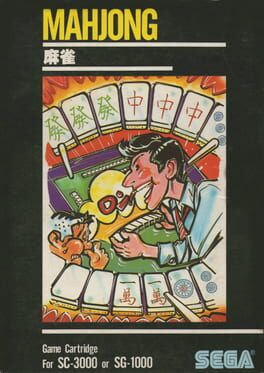
Sega Mahjong brings the timeless tile-matching challenge to the SG-1000 console. Players enjoy authentic mahjong rules in a simple, single-player experience. Released in 1983, this puzzle title showcases Sega's early foray into digital board games, offering a nostalgic look at classic Japanese gaming.
- Faithful shogi rule set
- Varied AI difficulty
- Historical significance as a launch title
- Simple single-player focus
- Faithful recreation of classic mahjong rules
- Simple, intuitive controls
- Nostalgic retro graphics
- Low learning curve for beginners
- Limited to single-player only
- Outdated graphics by modern standards
- Only available on legacy hardware
- Limited to single-player mode
- No modern features like online leaderboards
- Only available on legacy hardware
More alternatives & similar tools
Alternatives to Saikyou Habu Shogi
View all →
Alternatives to Sega Mahjong
View all →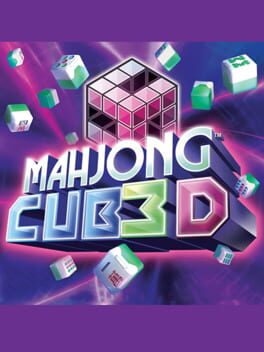
Classic Shanghai mahjong puzzles in vibrant 3D with multiple difficulty levels and game modes.
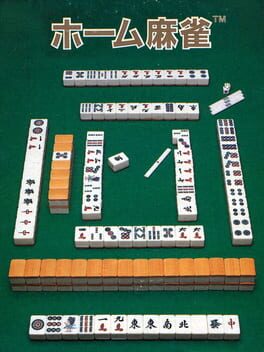
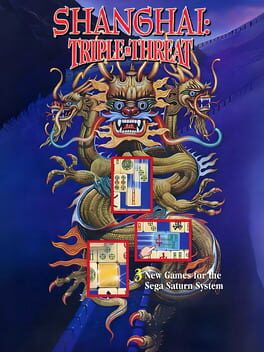
Classic Mahjong puzzle with three distinct game modes and themed tiles
The Verdict
AI-generated from listing dataBoth are faithful, single‑player retro board‑game titles on legacy hardware, but Sega Mahjong offers a simpler, lower‑learning‑curve puzzle, while Saikyou Habu Shogi provides deeper strategic depth with multiple AI levels.
Key differences
- •Mahjong vs. Shogi gameplay focus (puzzle vs. strategy)
- •AI difficulty options exist only in Shogi
- •Release era and hardware (SG‑1000 1983 vs. N64 1996)
- •Tutorial availability (Mahjong includes built‑in tutorial, Shogi does not)
- •Graphics style (Mahjong retro 60 Hz CRT mode, Shogi retro 3D N64)
Gameplay & fun factor
Shogi includes multiple AI difficulty settings, offering broader strategic challenge than Mahjong’s single difficulty.
Platform availability
Both are limited to legacy hardware only; no modern platforms for either.
Price & value
Both are paid one‑time purchases; no price difference indicated.
Multiplayer / co‑op
Both support only single‑player mode.
Content & replayability
Shogi’s varied AI levels increase replay value compared to Mahjong’s fixed difficulty curve.
Difficulty & accessibility
Mahjong provides a built‑in tutorial and low learning curve, making it easier for beginners.
Graphics & performance
Shogi’s 3D graphics were optimized for N64, offering more visual complexity than Mahjong’s CRT‑style display.
Choose Saikyou Habu Shogi if…
Players seeking deeper strategic gameplay with adjustable AI difficulty on Nintendo 64 hardware.
Choose Sega Mahjong if…
Beginners or casual puzzle fans who want a simple, tutorial‑guided mahjong experience on SG‑1000.
Common questions
Are either of these games available on modern consoles or PC?
No, both are only available on their original legacy hardware (SG‑1000 for Mahjong, N64 for Shogi).
Which game offers more challenge options for experienced players?
Saikyou Habu Shogi provides multiple AI difficulty settings, while Mahjong has a single, steadily increasing difficulty.
Is there any multiplayer or online feature?
Both titles are single‑player only with no online or local multiplayer features.