



Komoot vs Organic Maps
Side-by-side comparison of features, pricing, ratings, and alternatives.

Komoot is an outdoor adventure app that helps hikers, cyclists, mountain bikers, and runners find, plan, and navigate routes tailored to their sport and skill level. It combines sport-specific route generation with turn-by-turn voice navigation, offline map downloads for areas without cell coverage, and 3D map visualization to preview terrain. Beyond routing, Komoot is built around a community of roughly 45 million outdoor enthusiasts who share photos, tips, and route recommendations, contributing to a library of around 8 million routes across 100+ countries. Its Premium tier adds multi-day route planning with accommodation suggestions, personal route collections, live location sharing, weather forecasting along a route, and Garmin device integration.
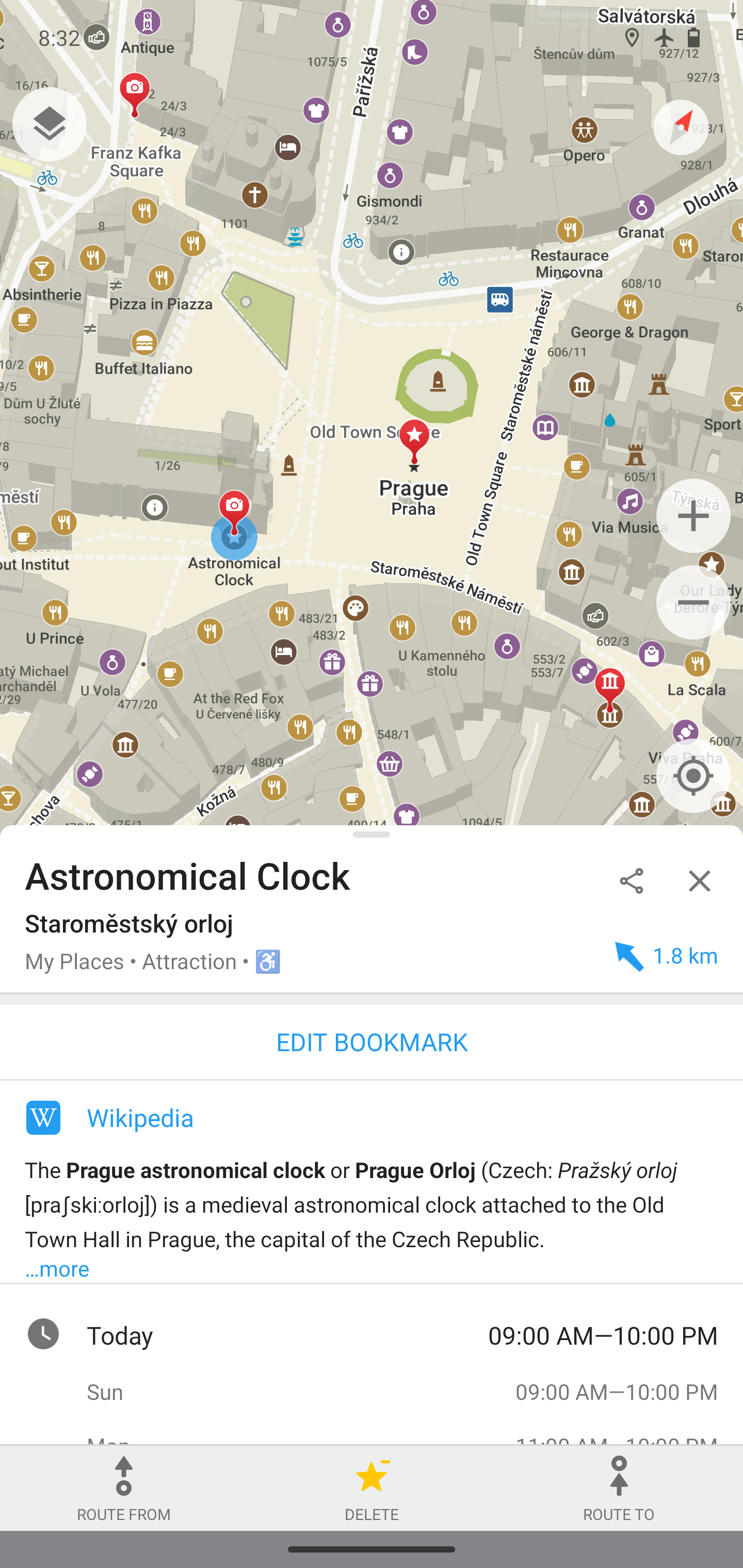
Organic Maps is a privacy-focused, open-source offline maps and GPS app licensed under the Apache License 2.0. It provides offline navigation with voice guidance, cycling routes, hiking trails, contour lines, elevation profiles, and metro maps, all without requiring an internet connection once maps are downloaded. The app collects no ads, tracking, or user data, and is completely free to use, with the project sustained through donations. It reached 6 million installs as of December 2025, and is available on iOS, Android (including Google Play and Huawei AppGallery), and Linux desktop via Flatpak and native packages.
- Large, active community contributes route tips and photos beyond raw GPS data
- Sport-specific route generation adapts to hiking, cycling, or running needs
- Offline maps are genuinely useful in areas with poor signal
- Available across web and mobile with Garmin device support
- Completely free with no ads, tracking, or account required
- Fully functional offline once maps are downloaded
- Open-source codebase that can be independently audited
- Detailed hiking and cycling route data including elevation
- Some of the most useful planning features are gated behind Premium
- Route quality depends partly on community contributions, which can vary by region
- Primarily suited to outdoor recreation, not general-purpose city navigation
- No real-time traffic or live transit data like commercial map apps
- Desktop support limited to Linux, with no native Windows or Mac app
- Relies on community-maintained map data rather than a large commercial team
More alternatives & similar tools
Alternatives to Komoot
View all →

Alternatives to Organic Maps
View all →

The Verdict
AI-generated from listing dataOrganic Maps offers completely free, privacy‑first offline navigation, while Komoot adds richer route planning and community content at a freemium cost.
Key differences
- •Organic Maps is 100% free with no ads or tracking; Komoot requires paid Premium for many planning features.
- •Komoot provides sport‑specific route generation, 3D previews and curated collections; Organic Maps focuses on raw map data and elevation.
- •Komoot syncs with Garmin devices and offers multi‑day trip planning; Organic Maps has no device integration.
- •Organic Maps is open‑source and can be audited; Komoot is closed source and does not disclose privacy details.
- •Komoot includes a community of route tips and photos; Organic Maps relies on community‑maintained map data only.
Pricing & value
Organic Maps is completely free with no premium tier; Komoot uses a freemium model that locks key features behind payment.
Ease of use / learning curve
Komoot offers guided route creation and 3D previews, making planning intuitive; Organic Maps provides basic map browsing.
Features & depth
Komoot includes sport‑specific routing, multi‑day planning, and curated collections; Organic Maps offers offline maps and elevation only.
Integrations & ecosystem
Komoot syncs with Garmin devices and works on web and mobile; Organic Maps has no listed integrations.
Security & privacy
Organic Maps collects no ads, tracking data, or personal info and is open source; Komoot’s privacy practices are not specified.
Support
Both provide mobile app support; no specific support details are given for either.
Scalability / lock‑in
Organic Maps’ open‑source, free model avoids vendor lock‑in; Komoot may lock users into its premium ecosystem.
Choose Komoot if…
Outdoor enthusiasts who want advanced route planning, device sync, and community content, willing to pay for premium.
Choose Organic Maps if…
Privacy‑focused users needing free offline maps without extra features.
Common questions
Is there any cost to use the core navigation features?
Organic Maps is completely free; Komoot’s core navigation is free but many planning tools require a paid Premium subscription.
Can I use the app without an internet connection?
Both apps support offline map downloads for navigation; however, Komoot’s route generation may need occasional online access for updates.
Does the app collect my personal data?
Organic Maps explicitly collects no ads, tracking data, or personal information; Komoot’s data collection is not specified in the provided facts.