



Eternal Champions vs Supreme Warrior
Side-by-side comparison of features, pricing, ratings, and alternatives.
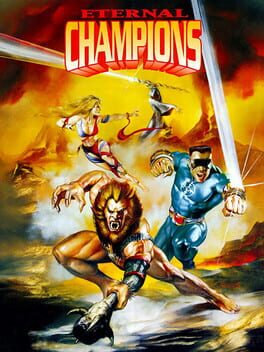
Eternal Champions is Sega's 1993 fighting game that blends classic arcade action with a deep narrative. An omniscient Eternal Champion gathers historic heroes moments before their untimely deaths to compete in a tournament that could rewrite fate. The game stands out with reflectable projectiles, force‑field mechanics, weapon‑bearing combatants, and stage‑specific Overkill finishing moves. It also features a unique training mode filled with robotic traps and supports both single‑player and split‑screen multiplayer battles.
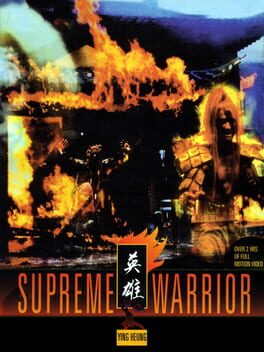
The game blends cinematic storytelling with timing‑based combat, putting you in the role of a Shaolin ally tasked with delivering the mask’s good half to a secret sanctuary. Experience a retro 1994 fighting experience on PC and Mac, complete with single‑player action and a fantasy martial‑arts narrative.
- Rich, time‑spanning character lore
- Innovative reflectable projectile system
- Varied weapon usage adds tactical depth
- Local split‑screen multiplayer support
- Unique FMV combat experience
- Engaging historical fantasy storyline
- Simple controls emphasize timing
- Authentic 1994 retro aesthetic
- Limited to legacy platforms; no online play
- Graphics are dated by modern standards
- Balancing issues among some characters
- Limited to single‑player mode
- Repetitive video sequences can feel dated
- Timing windows are unforgiving for newcomers
More alternatives & similar tools
Alternatives to Eternal Champions
View all →
Fight across time as resurrected champions battle for a second chance.
Alternatives to Supreme Warrior
View all →

The Verdict
AI-generated from listing dataEternal Champions offers broader replay value with multiplayer and diverse combat mechanics, while Supreme Warrior delivers a niche FMV single‑player experience.
Key differences
- •Multiplayer: Eternal Champions supports local split‑screen; Supreme Warrior is single‑player only.
- •Combat style: Eternal Champions uses real‑time fighting with reflectable projectiles; Supreme Warrior relies on timed FMV inputs.
- •Content depth: Eternal Champions includes a narrative tournament, varied characters, and training mode; Supreme Warrior focuses on a single storyline with repetitive video clips.
- •Graphics era: Eternal Champions (1993) has traditional sprite graphics; Supreme Warrior (1994) uses digitized FMV video, which may feel more dated.
Gameplay & fun factor
Eternal Champions provides real‑time fighting, reflectable projectiles, and training mode versus timing‑only FMV combat in Supreme Warrior.
Platform availability
Both are legacy titles; specific modern platform support not listed for either.
Price & value
Both cost a one‑time fee, but Eternal Champions adds multiplayer and more modes, giving higher perceived value.
Multiplayer / co‑op
Eternal Champions includes split‑screen multiplayer; Supreme Warrior has no multiplayer.
Content & replayability
Eternal Champions offers multiple characters, stages, and a training mode; Supreme Warrior repeats the same FMV sequences.
Difficulty & accessibility
Supreme Warrior’s simple timing controls are easier for casual players than Eternal Champions’ deeper combat mechanics.
Graphics & performance
Supreme Warrior’s FMV video provides a distinct retro movie aesthetic; Eternal Champions’ sprite graphics are dated but less novel.
Choose Eternal Champions if…
Players who want multiplayer fights and deeper combat mechanics.
Choose Supreme Warrior if…
Players seeking a short, story‑driven FMV experience.
Common questions
Can I play with friends?
Eternal Champions supports local split‑screen multiplayer; Supreme Warrior is single‑player only.
Which game offers more replay value?
Eternal Champions includes multiple characters, stages, and a training mode, giving higher replayability than Supreme Warrior’s single storyline.
What is the main difference in combat?
Eternal Champions uses real‑time fighting with reflectable projectiles; Supreme Warrior relies on timed inputs to FMV video clips.