



DND vs Wizardry: Proving Grounds of the Mad Overlord
Side-by-side comparison of features, pricing, ratings, and alternatives.
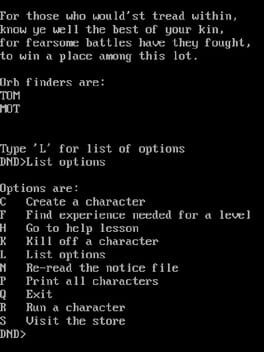
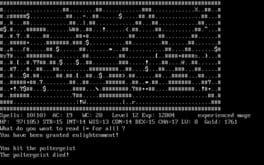
DND is a seminal mainframe classic from 1984 that introduced computer role‑playing games using Dungeons & Dragons rules. It offers a classic, non‑random dungeon crawl experience that laid the groundwork for the rogue‑like genre. Developed by R.O. Software, this single‑player fantasy RPG lets players explore static dungeons, fight monsters, and collect treasure in a text‑based interface reminiscent of early computer gaming.
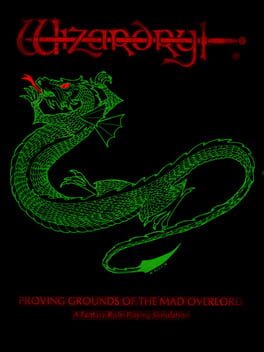
Choose from four base classes and evolve into elite roles like Bishop, Samurai, Lord, or Ninja, then explore a 3‑D vector maze filled with monsters, puzzles, and hidden secrets. The game blends classic RPG mechanics with a rich fantasy narrative, offering a challenging single‑player experience that defined the genre in the early 1980s.
- Authentic early RPG experience
- Faithful D&D rule implementation
- Strategic static dungeon design
- Low system requirements
- Deep party customization
- Rich class evolution system
- Challenging multi‑level dungeon
- Historical significance in RPG genre
- Text‑only interface may deter modern players
- No random dungeon generation limits replayability
- Limited accessibility on contemporary hardware
- Outdated user interface
- Limited graphics by modern standards
- Steep learning curve for new players
More alternatives & similar tools
Alternatives to DND
View all →
Alternatives to Wizardry: Proving Grounds of the Mad Overlord
View all →
The epic conclusion to the classic Wizardry saga, blending deep role‑playing with a rich fantasy world.

Play as the evil Archmage seeking revenge in a deadly labyrinth
Explore a haunted fantasy world where ancient talismans hold deadly power
The Verdict
AI-generated from listing dataWizardry offers classic turn‑based RPG graphics and deeper class evolution, while DND delivers a pure text experience faithful to early D&D rules; choose Wizardry for visual depth, DND for authentic text‑only nostalgia.
Key differences
- •Interface: Wizardry uses 1981 graphics and sound; DND is text‑only.
- •Dungeon design: Wizardry features a 10‑level 3D maze; DND uses a fixed, memorisable layout.
- •Class system: Wizardry evolves basic classes into elite archetypes; DND follows the original D&D classes without evolution.
- •Replayability: Wizardry’s multi‑level maze offers more exploration variety; DND’s static dungeon limits replay value.
Gameplay & fun factor
Wizardry’s multi‑level 3D maze and class evolution provide richer tactical variety than DND’s static text dungeon.
Platform availability
Both are listed as single‑player PC titles; no specific platform details are provided.
Price & value
Both are paid one‑time purchases; no price differences are specified.
Multiplayer / co‑op
Both are single‑player only.
Content & replayability
Wizardry’s ten‑level labyrinth and class upgrades give more content than DND’s fixed dungeon.
Difficulty & accessibility
DND’s text‑only interface and classic rules may be simpler to run on low‑spec hardware, but its steep learning curve is similar.
Graphics & performance
Wizardry includes 1981 graphics and sound; DND provides only text.
Choose DND if…
Players who prefer pure text immersion, minimal system requirements, and strict adherence to original D&D rules.
Choose Wizardry: Proving Grounds of the Mad Overlord if…
Players who want visual retro graphics, deeper class options, and a larger dungeon to explore.
Common questions
Do either of these games require modern hardware?
Both are low‑spec; DND runs on text terminals, Wizardry uses simple 1981 graphics, so modern hardware is not required.
Which game offers more replay value?
Wizardry, with its ten‑level maze and class evolution, offers more varied content than DND’s static dungeon.
Is there any multiplayer or co‑op option?
No; both products are single‑player only.