



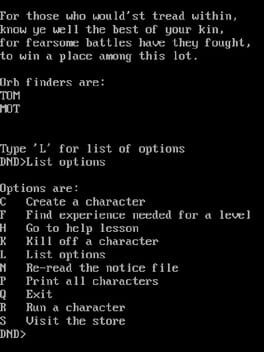
DND is a seminal mainframe classic from 1984 that introduced computer role‑playing games using Dungeons & Dragons rules. It offers a classic, non‑random dungeon crawl experience that laid the groundwork for the rogue‑like genre. Developed by R.O. Software, this single‑player fantasy RPG lets players explore static dungeons, fight monsters, and collect treasure in a text‑based interface reminiscent of early computer gaming.
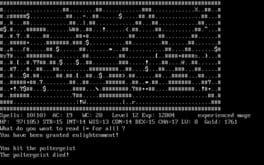
Larn is a pioneering turn‑based role‑playing game that drops you into a randomly generated dungeon filled with monsters, traps, and treasure. Its simple ASCII graphics and deep hunger‑management system create a challenging, replayable experience that defined early roguelikes. Originally released in 1986, Larn remains free and open‑source, allowing modern players on PC, Linux, and Mac to explore its retro charm while testing their strategic survival skills.
- Authentic early RPG experience
- Faithful D&D rule implementation
- Strategic static dungeon design
- Low system requirements
- Free and open‑source
- Infinite replayability with random dungeons
- Deep resource management adds strategic depth
- Runs on virtually any modern OS
- Text‑only interface may deter modern players
- No random dungeon generation limits replayability
- Limited accessibility on contemporary hardware
- ASCII graphics may deter players seeking visuals
- Steep learning curve for newcomers to roguelikes
- Limited audio and modern UI features
More alternatives & similar tools
Alternatives to DND
View all →
Alternatives to Larn
View all →
The Verdict
AI-generated from listing dataDND offers a faithful, static‑dungeon D&D experience for a one‑time fee, while Larn provides free, procedurally‑generated roguelike gameplay with open‑source flexibility.
Key differences
- •Pricing: DND is paid (one‑time); Larn is free and open‑source.
- •Dungeon design: DND has a fixed layout; Larn generates random levels each playthrough.
- •Graphics: DND uses pure text only; Larn uses ASCII graphics.
- •Replayability: DND’s static dungeon limits replay value; Larn’s infinite random dungeons give endless variety.
- •Resource systems: Larn includes hunger and permadeath; DND does not mention such mechanics.
Pricing & value
Larn is free and open‑source, whereas DND requires a one‑time purchase.
Gameplay & fun factor
Both offer turn‑based combat and classic RPG depth; choice depends on static vs random dungeon preference.
Platform availability
Larn runs on virtually any modern OS; DND is a mainframe‑style text game with limited contemporary hardware support.
Multiplayer / co‑op
Both are single‑player only.
Content & replayability
Larn’s procedural generation and permadeath give infinite replayability; DND’s fixed dungeon limits replay.
Difficulty & accessibility
DND’s static layout and lack of hunger/permadeath make it more accessible than Larn’s steep learning curve and harsh survival mechanics.
Graphics & performance
Larn’s ASCII graphics run on any modern system; DND’s pure text interface may be harder to run on current hardware.
Choose DND if…
Buyers who want an authentic, low‑learning‑curve D&D experience and are willing to pay once.
Choose Larn if…
Buyers who prefer free, endlessly varied roguelike gameplay and can handle ASCII graphics and harsher mechanics.
Common questions
Is there any cost to play Larn?
No, Larn is free and open‑source.
Can I play DND on a modern PC?
Not specified; DND runs on mainframe‑style terminals and may have limited compatibility with contemporary hardware.
Which game offers more replay value?
Larn, because its dungeon levels are procedurally generated, providing infinite unique layouts.