





Anki is a flashcard application built around spaced repetition, using an algorithm to schedule reviews so learners spend more time on challenging material and less on cards they already know well. It is free and open source on desktop (Windows, macOS, Linux), with source code publicly available on GitHub and an extensible add-on ecosystem built by the community.
Drops teaches vocabulary in over 40 languages through short, icon-driven games rather than grammar drills, pairing each word with an illustration to build recall through visual association and spaced repetition. The free tier caps sessions at 5 minutes a day, a deliberate constraint meant to build a daily micro-habit instead of encouraging long study blocks.
- Completely free and open source on desktop and Android
- Highly customizable via add-ons
- Proven spaced-repetition algorithm with a long track record
- Handles massive decks without performance issues
- Fast, visually engaging way to build vocabulary
- Effective spaced repetition for retention
- Works offline
- Large language selection (40+)
- Steeper learning curve and dated UI compared to modern flashcard apps
- AnkiMobile (iOS) requires a one-time paid purchase
- No built-in AI content generation like some newer competitors
- Not designed to teach grammar or conversation skills
- Free tier's 5-minute cap is restrictive
- Best used alongside another learning method, not standalone
More alternatives & similar tools
Alternatives to Anki
View all →
AI note-taking app that turns notes into flashcards with spaced repetition to help you actually learn.
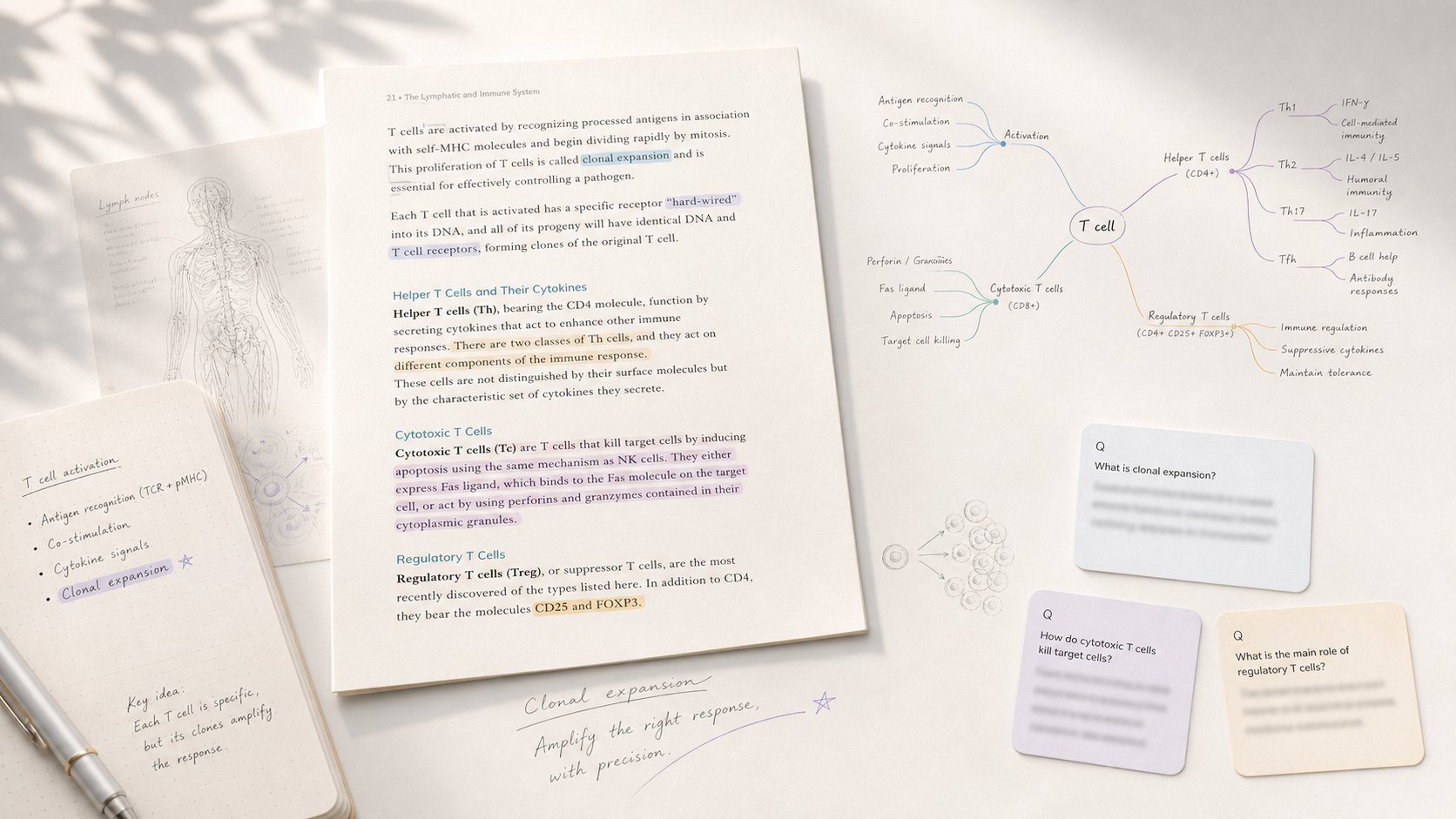
Study app that turns PDF/EPUB annotations into mind maps and spaced-repetition flashcards.

All-in-one study platform with flashcards, notes, and AI-generated practice exams
Alternatives to Drops
View all →


The Verdict
AI-generated from listing dataAnki offers a free, highly customizable flashcard system for deep, long‑term study, while Drops provides a quick, visual, gamified vocabulary app with limited free use.
Key differences
- •Pricing model – Anki is completely free; Drops limits free use to 5‑minute daily sessions.
- •Learning curve – Anki has a steeper, dated UI; Drops is intuitive and game‑like.
- •Depth of content – Anki supports rich media, massive decks, and add‑ons; Drops focuses on 5,000+ core vocab words per language.
- •Offline capability – Both work offline after download, but Drops emphasizes offline play for language packs.
- •Support – Drops offers email/help‑center support; Anki provides no listed support channels.
Pricing & value
Anki is free and open source; Drops is freemium with a restrictive 5‑minute daily cap.
Ease of use / learning curve
Drops has a modern, game‑based UI; Anki’s UI is dated and has a steeper learning curve.
Features & depth
Anki supports rich media, huge decks (>100k cards), and add‑ons; Drops limits to vocab games and basic grammar snippets.
Integrations & ecosystem
Both lack an API and have no listed third‑party integrations.
Support
Drops provides email and Help Center support; Anki lists no support options.
Scalability
Anki handles very large decks efficiently; Drops is designed for limited vocab sets.
Choose Anki if…
Learners needing extensive, customizable flashcards for deep study (students, professionals, language masters).
Choose Drops if…
Beginners wanting short, daily, visual vocabulary practice on mobile.
Common questions
Is there any cost to use Anki on iOS?
AnkiMobile for iOS requires a one‑time purchase; the desktop and Android versions are free.
Can I use Drops without an internet connection?
Yes, once language packs are downloaded, Drops works fully offline.
Which tool handles very large study decks better?
Anki is reported to perform well with decks beyond 100,000 cards, whereas Drops focuses on a limited vocab set.