




Etaprise
One Platform. Every Operation. Connected Intelligence.

What is Etaprise?
Etaprise is a unified Field Service Management (FSM) operating platform that integrates AI-powered dispatch, fleet management, warehouse management, IoT connected assets, contracts, sales, customer service, projects, BOM estimation, and two-way ERP sync into one shared data model. It connects field operations to finance in real time, works offline, and is configurable per industry, designed to replace fragmented operational stacks with a single record approach.
SpecificationsAI-estimated
Key Features of Etaprise
Use Cases for Etaprise
Elevator / Escalator Maintenance
Use ElevatorOne and AI FSM to handle entrapment routing, AMC entitlement locks, annual safety tests, and IoT predictive alerts.
Industrial Field Service
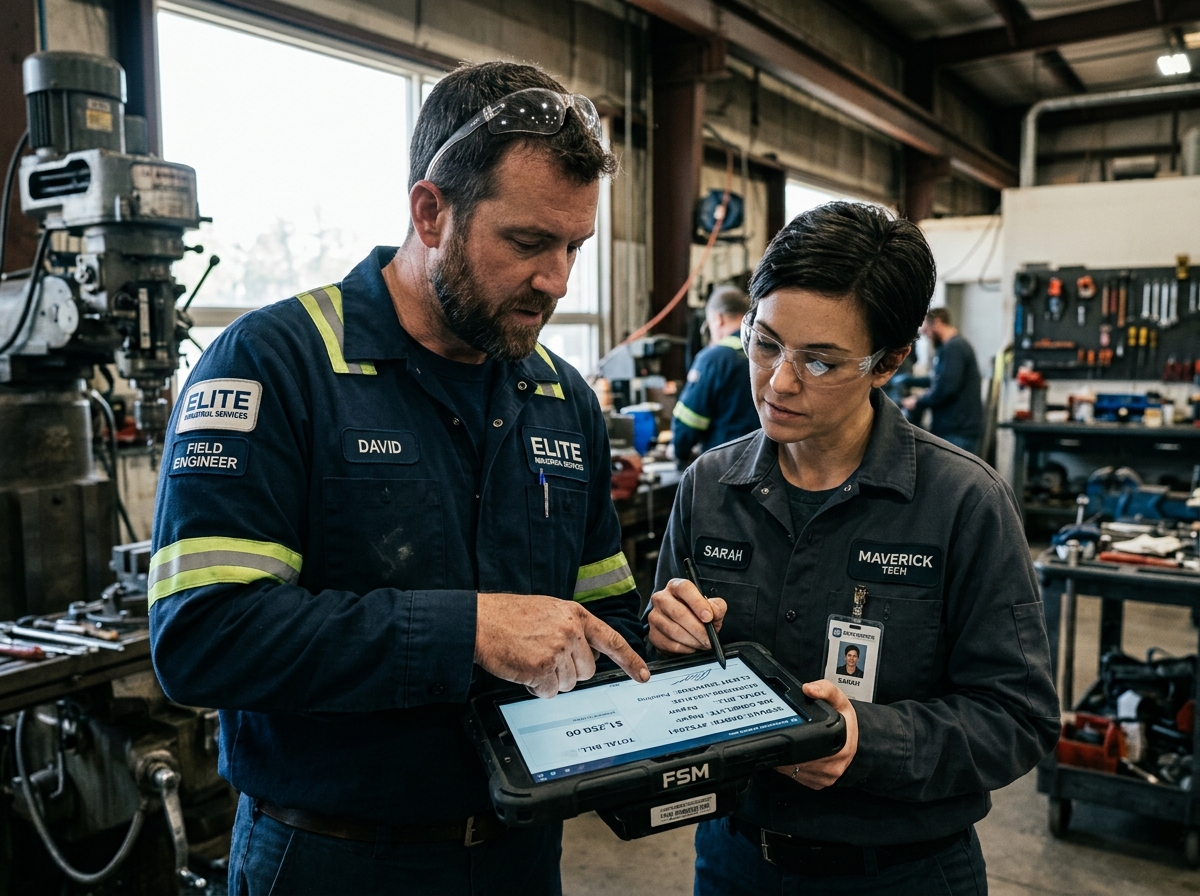
Discover and dispatch certified engineers based on skill, live traffic, and parts on hand; capture offline signatures and bill same day.
Fleet and Driver Management
Track driver hours of service, vehicle diagnostics, DVIR walkarounds, and safety scoring in real-time.
Construction Project Billing
Manage stage gates, earned value, lien waivers, and progress billing applications from the field to finance.
Asset and Compliance Tracking
Tag equipment with NFC/QR, schedule calibrations, manage repair-vs-replace decisions, and maintain compliance records.
Remote / Offline Fieldwork
Capture data, photos, and signatures in basements, remote corridors, and plant rooms with zero signal, syncing when reconnected.
How to use Etaprise?
Bring a week of real jobs
Provide your work orders, vans, and asset registers to Etaprise team.
Configuration
They configure ETAPRISE OS around your actual operations — starting with one region or contract type.
Parallel run
Use it alongside your current stack; expand once numbers hold up.
Go live
Move to production with the shared data model, automated workflows, and real-time sync.
Pros & Cons of Etaprise
Pros
- Unifies 9 specialised engines and 16 capabilities on one platform, eliminating data re-entry and reconciliation
- AI-driven autonomous scheduling and dispatch, optimizing by certifications, live traffic, and parts on hand
- Offline-first mobile apps work with zero signal, syncing data, photos, and signatures on reconnection
- Two-way enterprise ERP, CRM, and accounting integration (REST/GraphQL) without ripping and replacing existing systems
- Field-to-finance automation: signed off on site, billed the same day with entitlement locks and rate cards
- Modular adoption — start with one engine and add others via configuration, not new integrations
- Presence of IoT Hub for predictive dispatch and connected asset monitoring across protocols (Modbus, BACnet, MQTT, OPC-UA)
- Specialised vertical solutions such as ElevatorOne for lifts and escalators, DSS for driver hours-of-service compliance, and SAMS for asset calibration/compliance
- Enterprise-grade security: TLS 1.3 mutual authentication, RBAC, multi-region deployment
- Fast deployment: live in weeks, not quarters, starting with one region or contract type
- Procedures and remote assistance embedded in the technician's workflow, reducing second visits
- BOM Estimator turns kinematics and vendor price matrices into code-compliant, audit-ready proposals in minutes
Cons
- Complexity: The platform's scope is vast, potentially overwhelming for smaller operations or simple uses
- Transparent pricing not available on the website — requires a demo or sales engagement
- No free self-serve trial or open-source version; onboarding likely involves professional services
- May be overkill for companies with only one or two basic needs, though modularity helps
- Offline-first is a design constraint but implies device storage and sync conflict management challenges
- Dependency on the platform becoming a single source of truth, which may create lock-in
- Given the breadth of features, actual configurational complexity for specific sectors might still take time despite 'weeks' claim
- No mention of support for multiple languages or mobile OS parity details
Frequently Asked Questions
How long until we are actually live?
Weeks, not quarters. They start with one region or contract type, load your real data, and run it alongside what you have today. Expand when the numbers hold up.
Do we have to replace our ERP?
No. ETAPRISE OS is the operations layer, not the general ledger. It syncs two ways with your enterprise ERP, CRM, and accounting systems.
What happens when there is no signal?
The mobile apps carry a local offline core. Engineers capture data, photos, and signatures with zero bars, and everything syncs on reconnection.
Can we start with one engine instead of nine?
Yes, and most operators do. Each engine is useful on its own and shares One Platform, so adding the second one is configuration rather than another integration project.
Will it pass our security review?
It is built for that conversation: TLS 1.3 mutual authentication, role-based access control, multi-region deployment, and on-device offline fallback. They will sit with your security team.
Reviews & Ratings0.0
No reviews yet. Be the first to write one!
Top Alternatives & Similar Software
View all alternatives & similar software→


People also viewed


Related searches
About the Product
Is this your tool?
Claim this page to update details, reply to user reviews, and drive more traffic to your product.
Claim this Product →
Tags
Explore Related Topics
Keep up with Etaprise alternatives
New alternatives, pricing changes and the week's biggest movers - one email every Tuesday.