



The Legend of Zelda: Ocarina of Time vs The Legend of Zelda: Skyward Sword
Side-by-side comparison of features, pricing, ratings, and alternatives.
The Legend of Zelda: Ocarina of Time transports players to the land of Hyrule, where they guide Link on an epic quest to stop Ganondorf and restore peace. With its groundbreaking 3D world, memorable characters, and iconic music, the game set a new standard for adventure titles. Its innovative time‑travel mechanics, intricate dungeons, and richly detailed environments continue to captivate both new players and longtime fans, cementing its legacy as one of the greatest video games ever made.
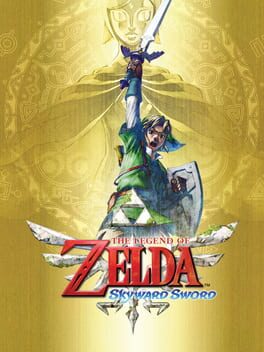
Embark on Link’s earliest adventure, soaring above floating islands and delving into ancient temples to uncover the origins of the Master Sword. The game blends classic Zelda puzzles with a fresh motion‑controlled combat system, delivering a memorable fantasy journey. The richly detailed world invites exploration, while a heartfelt narrative ties together themes of destiny and courage, making it a standout entry in the series.
- Groundbreaking 3D design for its era
- Engaging time‑travel mechanics
- Memorable music and atmosphere
- Highly replayable with hidden secrets
- Innovative motion‑based combat
- Stunning sky‑world exploration
- Deep, memorable story
- Beautiful art and music
- Dated graphics by modern standards
- Limited control options on original hardware
- Some puzzles can be obscure without guides
- Motion controls can be tiring
- Linear progression limits open‑world freedom
- Limited replay value after 100% completion
More alternatives & similar tools
Alternatives to The Legend of Zelda: Ocarina of Time
View all →
Control the seasons to save Holodrum in this classic adventure.
Link up with friends for a magical co‑op adventure in Hyrule.
Soar through the skies and master the sword in Zelda's origin story.
Alternatives to The Legend of Zelda: Skyward Sword
View all →
A tiny hero embarks on a big adventure to save Hyrule’s smallest citizens.
A timeless adventure that defines 3D action‑puzzle gaming
Relive Link's timeless adventure in stunning 3D on the go
The Verdict
AI-generated from listing dataOcarina of Time offers classic, highly praised 3D adventure with timeless design, while Skyward Sword provides newer motion‑based combat and a richer sky world at the cost of linearity.
Key differences
- •Control scheme: Ocarina uses traditional button inputs; Skyward Sword relies on motion controls (Wii MotionPlus or Joy‑Con).
- •World design: Ocarina features open‑world Hyrule with seamless overworld/dungeon flow; Skyward Sword’s sky world is linear and flight‑focused.
- •Replay value: Ocarina has hidden secrets and high replayability; Skyward Sword’s replay value drops after 100% completion.
- •Release era: Ocarina (1998) has dated graphics; Skyward Sword (2011) offers hand‑drawn art and more modern visuals.
- •Narrative focus: Ocarina follows a coming‑of‑age story; Skyward Sword explores the Master Sword’s origin.
Gameplay & fun factor
Ocarina’s groundbreaking 3D design and time‑travel puzzles are widely praised (99/100), offering deeper variety than Skyward Sword’s motion‑centric combat.
Platform availability
Both are single‑player Nintendo titles; specific platforms not listed, so availability is equivalent.
Price & value
Both priced at $59.99 with one‑time purchase; value depends on personal preference, not price.
Multiplayer / co‑op
Both are single‑player only; no multiplayer difference.
Content & replayability
Ocarina is noted as highly replayable with hidden secrets; Skyward Sword has limited replay after 100% completion.
Difficulty & accessibility
Ocarina’s traditional controls are less physically demanding than Skyward Sword’s motion controls, which can be tiring.
Graphics & performance
Skyward Sword’s hand‑drawn art style and orchestral score are newer and visually richer than Ocarina’s dated 1998 graphics.
Choose The Legend of Zelda: Ocarina of Time if…
Fans of classic Zelda, open‑world exploration, and high replay value.
Choose The Legend of Zelda: Skyward Sword if…
Players who want motion‑based combat, a fresh art style, and a story about the Master Sword’s origin.
Common questions
Do I need special hardware for either game?
Skyward Sword requires Wii MotionPlus or Switch Joy‑Con for motion controls; Ocarina of Time uses standard controller inputs.
Which game offers more lasting replay value?
Ocarina of Time is noted for high replayability with hidden secrets, while Skyward Sword’s replay drops after 100% completion.
How do the graphics compare?
Skyward Sword features a newer hand‑drawn art style and orchestral score; Ocarina of Time has graphics that are dated by modern standards.