



Tales of Destiny vs The Legend of Dragoon
Side-by-side comparison of features, pricing, ratings, and alternatives.

Tales of Destiny is a classic Japanese role‑playing game that blends fast‑paced action combat with a richly woven narrative. Players follow the journey of Stahn Aileron and his allies as they confront destiny, betrayal, and the forces that threaten their world. The game features a vibrant world to explore, character‑driven story arcs, and a unique Linear Motion Battle System that keeps battles dynamic and engaging, making it a standout title of its era.
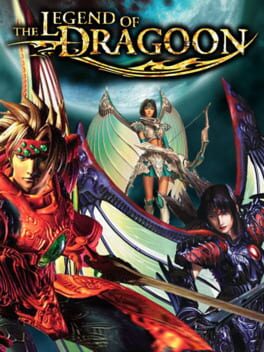
The Legend of Dragoon is a classic Japanese‑style role‑playing game that blends pre‑rendered backgrounds, 3D characters, and cinematic CG cutscenes to tell a tale of ancient dragons and human destiny. Players follow Dart and his allies on a linear journey across a world map of connected locations, battling foes with timing‑based critical attacks and powerful Dragoon forms.
- Engaging real‑time combat system
- Deep, branching storyline
- Memorable characters and voice acting
- Rich world with hidden secrets
- Engaging Dragoon transformation system
- Rich cinematic storytelling
- Strategic timing‑based combat
- Nostalgic JRPG visuals
- Outdated graphics by modern standards
- Limited save slots can be restrictive
- Occasional balance issues with enemy difficulty
- Linear world map limits exploration
- Occasional pacing slowdown during dialogue
- Outdated graphics by modern standards
More alternatives & similar tools
Alternatives to Tales of Destiny
View all →

Epic real‑time RPG adventure blending fantasy and sci‑fi on a single journey.


Alternatives to The Legend of Dragoon
View all →
Embark on a classic quest to defeat the Dragonlord and rescue the kidnapped princess.
Epic real‑time RPG adventure blending fantasy and sci‑fi on a single journey.
The Verdict
AI-generated from listing dataTales of Destiny offers real‑time combat and more open‑world exploration, while The Legend of Dragoon provides turn‑based, timing‑based battles with a linear map and Dragoon transformations.
Key differences
- •Combat system: real‑time (A) vs turn‑based with timing (B)
- •World design: open‑world towns/dungeons (A) vs linear dot map (B)
- •Multiplayer support: both single‑player, but A also includes multiplayer mode
- •Character mechanic: A has party swapping; B features Dragoon transformation
- •Release era: A released 1997, B 1999 – minor impact on story setting
Gameplay & fun factor
Real‑time Linear Motion Battle System and open exploration give A a more dynamic play experience.
Platform availability
Both are legacy titles released for older consoles; no platform data provided.
Price & value
Both priced at $49.99 with identical critic scores (78/100).
Multiplayer / co‑op
A lists multiplayer support; B is single‑player only.
Content & replayability
A’s branching narrative, hidden items, and party swapping increase replay value over B’s linear map.
Difficulty & accessibility
B’s turn‑based combat with timing cues can be easier for players preferring strategic pacing.
Graphics & performance
Both noted as having outdated graphics by modern standards.
Choose Tales of Destiny if…
Players who want real‑time combat, open exploration, and optional multiplayer.
Choose The Legend of Dragoon if…
Players who prefer turn‑based, timing‑based battles and the Dragoon transformation mechanic.
Common questions
Do either of these games support co‑op play?
Only Tales of Destiny (A) lists multiplayer; The Legend of Dragoon (B) is single‑player only.
Which game has more exploration content?
Tales of Destiny features explorable towns, dungeons, and hidden items, while The Legend of Dragoon uses a linear dot map.
Are the graphics comparable?
Both are described as having outdated graphics by modern standards, so they are comparable in visual quality.