



Shanghai II: Dragon's Eye vs Shanghai: Triple-Threat
Side-by-side comparison of features, pricing, ratings, and alternatives.
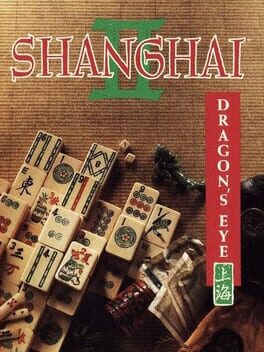
Shanghai II: Dragon's Eye brings the beloved tile‑matching gameplay of the original Shanghai to PC and Mac, expanding it with eight distinct tile sets and twelve zodiac‑themed board layouts. The game includes a powerful layout editor, letting players design custom puzzles and share them with friends. The standout Dragon’s Eye mode adds a competitive two‑player variant where opponents alternate adding and removing tiles, testing strategic foresight as one player tries to clear the board while the other blocks them.
Shanghai: Triple-Threat brings the timeless Mahjong tile‑matching challenge to PC with a twist. Players clear stacked tiles by pairing visible pieces, but only those with a free left or right side can be removed, adding strategic depth. The collection includes the classic Shanghai layout plus three innovative modes—The Great Wall’s falling tiles, Beijing’s sliding gaps, and the competitive Golden Tile duel—each offering a fresh take on the traditional puzzle. Beyond solo play, the game supports two‑player competition and an arcade‑style mode, delivering varied experiences for both casual solvers and competitive gamers. With three themed tile sets, the Triple Threat package ensures visual variety and replayability across its multiple game types.
- Rich variety of tile sets and board themes
- Two‑player Dragon’s Eye mode adds strategic depth
- Custom layout editor encourages creativity
- Cross‑platform support for PC and Mac
- Rich variety of game modes
- Two‑player competitive option
- Themed tile sets add visual appeal
- Classic Mahjong mechanics are well‑implemented
- No online multiplayer beyond local two‑player
- Graphics are dated by modern standards
- Limited sound effects and music
- Graphics are dated by modern standards
- Limited platform availability (PC only)
- No online multiplayer support
More alternatives & similar tools
Alternatives to Shanghai II: Dragon's Eye
View all →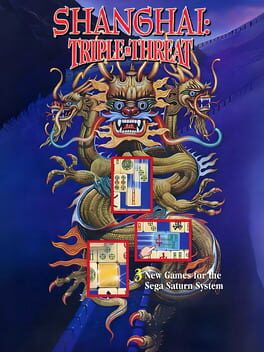
Classic Mahjong puzzle with three distinct game modes and themed tiles
Classic mahjong challenge from the golden era of Japanese gaming
Alternatives to Shanghai: Triple-Threat
View all →Match mahjong tiles in classic Shanghai style with a twist – the two‑player Dragon’s Eye challenge.
The Verdict
AI-generated from listing dataBoth games cost the same, but Shanghai II: Dragon's Eye offers more content and Mac support, while Shanghai: Triple‑Threat provides built‑in two‑player competitive play on PC only.
Key differences
- •Platform support: A is PC only; B runs on Windows and macOS.
- •Multiplayer: A includes a two‑player competitive mode; B’s spec lists only single‑player.
- •Content volume: B has 8 tile sets, 12 zodiac‑themed layouts, and a layout editor; A offers 3 modes and themed tiles.
- •Customization: B lets players create and save custom layouts; A has no editor.
- •Release era: A released 1994, B 1990 – may affect compatibility with modern OS.
Pricing & value
Both priced at $19.99, offering comparable monetary cost.
Platform availability
B runs on Windows PCs and macOS; A is limited to PC.
Multiplayer / co‑op
A includes a two‑player competitive mode; B’s specification lists only single‑player.
Content & replayability
B provides 8 tile sets, 12 zodiac layouts, and a custom layout editor; A offers 3 modes and themed tiles.
Graphics & performance
Both described as having dated graphics; no performance data to differentiate.
Choose Shanghai II: Dragon's Eye if…
Buyers who need Mac support, more layouts, and a custom layout editor.
Choose Shanghai: Triple-Threat if…
Buyers who want built‑in two‑player competitive Mahjong on PC and don’t need extra layouts.
Common questions
Is there any price difference between the two games?
No, both have an MSRP of $19.99.
Can I play the game on a Mac?
Only Shanghai II: Dragon's Eye (Product B) supports macOS; Shanghai: Triple‑Threat (Product A) is PC only.
Which game includes a two‑player mode?
Shanghai: Triple‑Threat (Product A) includes a two‑player competitive mode; Product B’s spec lists only single‑player.