



Rock Band 3 vs Rocksmith
Side-by-side comparison of features, pricing, ratings, and alternatives.
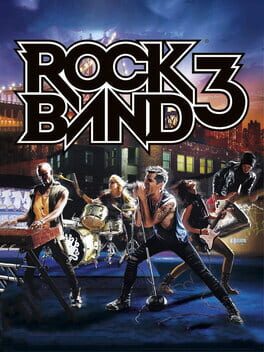
Rock Band 3 expands the franchise with 83 brand‑new songs, bringing fresh challenges for both seasoned players and newcomers. For the first time the game supports a keyboard/keytar peripheral, letting you play melodies alongside guitars and drums. The title runs on PlayStation 3 and Xbox 360, offering single‑player, co‑op, and split‑screen multiplayer modes that make it perfect for parties and family gatherings. With a PEGI 12 / ESRB T rating, it delivers a balanced mix of fun and challenge for teen and adult audiences.
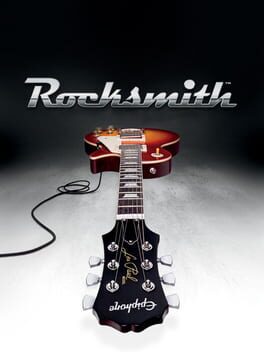
Rocksmith transforms your real instrument into a game controller, delivering a visually intuitive way to play and learn music. Its innovative design engages both seasoned musicians and complete beginners, making practice feel like a fun challenge. The game offers a vast library of songs and real-time feedback, helping players develop technique and timing while enjoying the music they love.
- Huge new song library
- First game with keyboard support
- Robust local multiplayer
- High critic score
- Authentic instrument integration
- Extensive song catalog
- Real‑time feedback accelerates learning
- Supports both solo and multiplayer play
- No online multiplayer
- Limited to PS3 and Xbox 360
- Additional songs require extra purchase
- Requires compatible guitar/bass cable
- Limited to older console generations
- Learning curve can be steep for absolute beginners
More alternatives & similar tools
Alternatives to Rock Band 3
View all →

Play the full band experience with guitar, bass, drums, and vocals in one game
Alternatives to Rocksmith
View all →
Rock out with epic tracks and battle mode in Guitar Hero III.

Play the Beatles' greatest hits with guitars, drums, and mic in a band‑focused Rock Band experience.
The Verdict
AI-generated from listing dataRock Band 3 offers a party‑focused, instrument‑varied experience with strong local multiplayer, while Rocksmith emphasizes realistic instrument learning with solo practice tools.
Key differences
- •Rock Band 3 includes built‑in keyboard/keytar support; Rocksmith requires your own guitar or bass and a USB cable.
- •Rock Band 3 supports up to four players split‑screen; Rocksmith only offers single‑player and limited multiplayer.
- •Rock Band 3 is a music performance game with a party mode; Rocksmith is an educational simulator with practice/lesson features.
Gameplay & fun factor
Rock Band 3 provides party‑style, multi‑instrument play for groups, whereas Rocksmith focuses on solo learning.
Platform availability
Both are limited to PS3 and Xbox 360 (Rocksmith also adds PC), no newer consoles.
Price & value
Both have a $59.99 MSRP; value depends on whether you need extra songs (Rock Band) or a cable (Rocksmith).
Multiplayer / co‑op
Rock Band 3 supports up to four players split‑screen; Rocksmith only offers single‑player and basic multiplayer.
Content & replayability
Rock Band 3 adds 83 new tracks plus expandable DLC; Rocksmith’s catalog is smaller but focuses on skill progression.
Difficulty & accessibility
Rocksmith provides practice tools, loop/slow‑down, and lesson plans for learning; Rock Band 3 is more casual.
Graphics & performance
Both run on the same generation hardware; no specific graphics advantage noted.
Choose Rock Band 3 if…
Ideal for groups wanting a fun, instrument‑varied party game on PS3/Xbox 360.
Choose Rocksmith if…
Best for individuals who want to learn real guitar/bass or piano with structured lessons.
Common questions
Do I need to buy extra hardware for either game?
Rock Band 3 includes all instruments except optional extra songs; Rocksmith requires a compatible guitar/bass and USB cable.
Can I play online with friends?
Neither game offers online multiplayer; Rock Band 3 has local split‑screen only, Rocksmith has limited local multiplayer.
Which game gives more songs out of the box?
Rock Band 3 ships with 83 new tracks plus the existing library; Rocksmith provides a curated set of popular songs but fewer overall.