



Rampage vs Rampage: Total Destruction
Side-by-side comparison of features, pricing, ratings, and alternatives.
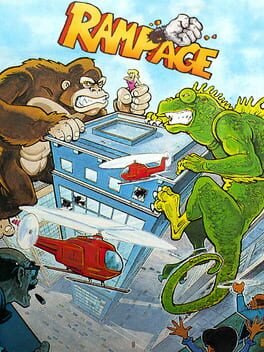
Rampage lets you control massive mutated creatures on a mission to demolish everything in sight. Crush buildings, topple vehicles, and uncover hidden items as you wreak havoc across each level. The classic arcade experience blends simple controls with destructive fun, perfect for quick sessions or extended monster mayhem. The game supports both solo play and competitive multiplayer, letting friends join the rampage together. With its retro graphics and timeless gameplay, Rampage remains a beloved title for fans of chaotic, sci‑fi beat ’em up action.
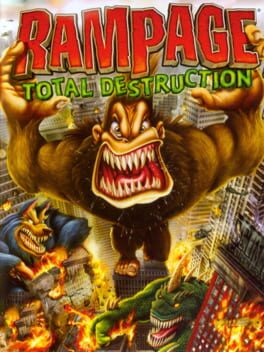
Rampage: Total Destruction lets players wreak havoc across global cities in a campaign mode that unlocks new locations as you demolish them. The game also features competitive King of the City and King of the World modes where up to four players battle for district control, plus a fast‑paced time trial to clear all districts before the clock runs out. With split‑screen support on PlayStation 2, friends can join the destruction in local multiplayer, combining the series’ signature comedy with action‑packed fighting gameplay for a party‑style experience.
- Instantly addictive destruction gameplay
- Co‑op multiplayer doubles the fun
- Simple controls suitable for all ages
- Retro charm with lasting replay value
- Entertaining local multiplayer
- Variety of game modes keep play fresh
- Humorous and cartoony presentation
- Easy to pick up for casual gamers
- Limited depth beyond smashing mechanics
- Graphics are dated by modern standards
- No official online leaderboards
- Limited to PlayStation 2 platform
- Graphics are dated by modern standards
- Multiplayer restricted to split‑screen only
More alternatives & similar tools
Alternatives to Rampage
View all →
Smash cities, dominate districts, and race the clock in chaotic multiplayer mayhem.
Rescue monsters, smash cities, and battle alien hordes across the Solar System
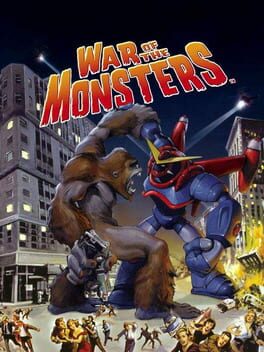
Step into the shoes of a 100‑foot monster and smash cities in 1950s sci‑fi chaos
Alternatives to Rampage: Total Destruction
View all →
The Verdict
AI-generated from listing dataRampage: Total Destruction (A) offers a richer, modern‑console experience with multiple modes and up to four‑player split‑screen, while Rampage (B) is a retro arcade title with simple two‑player co‑op and very limited content.
Key differences
- •Platform: A runs on PlayStation 2; B is an original 1986 arcade game (no modern console support).
- •Multiplayer capacity: A supports up to four players split‑screen; B only supports two players co‑op.
- •Game modes: A includes campaign, King of the City, King of the World, and Time Trial; B offers only level‑based smashing with boss fights.
- •Content depth: A unlocks new cities and districts over time; B provides a single set of levels with limited replay variety.
- •Graphics era: A’s 2006 graphics are newer than B’s 1986 arcade visuals.
Gameplay & fun factor
A provides several distinct modes (campaign, competitive, time trials) versus B’s single smash‑through level loop.
Platform availability
A is playable on PlayStation 2; B is an arcade‑only title from 1986 with no listed modern ports.
Price & value
Both are priced at $19.99, offering comparable cost.
Multiplayer / co‑op
A supports up to four players split‑screen; B only allows two‑player co‑op.
Content & replayability
A’s multiple cities, unlockable modes, and time trials give higher replay value than B’s limited level set.
Difficulty & accessibility
Both are described as easy to pick up with simple controls suitable for casual players.
Graphics & performance
A’s 2006 graphics are newer than B’s 1986 arcade visuals, though both are dated by modern standards.
Choose Rampage if…
Buyers seeking a nostalgic, simple two‑player arcade experience.
Choose Rampage: Total Destruction if…
Buyers who want a modern console party game with up to four local players and varied modes.
Common questions
Can I play either game online?
No. A offers only split‑screen local multiplayer; B has no online features.
Do both games support more than two players?
A supports up to four players split‑screen; B supports only two players.
Is there any difference in price?
Both are listed at $19.99, so price is identical.