



Pool Paradise vs Virtual Pool 64
Side-by-side comparison of features, pricing, ratings, and alternatives.

The game offers 10 unique table designs, 11 rule types, and 10 tournaments, plus fun mini‑games like beach darts, skee‑ball with cue balls, and coconut cannon shooting. Whether you’re practicing, chasing championships, or mastering trick shots, Pool Paradise delivers a relaxed yet competitive billiards experience.
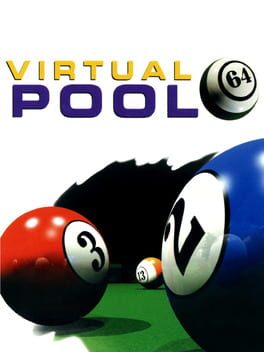
Virtual Pool 64 delivers a highly realistic billiards experience with ultra‑real physics that mimic real‑world pool. Choose from nine pool variants, master trick shots, and compete against computer opponents in tournament mode.
- Varied exotic locations keep gameplay fresh
- Large roster of AI opponents with distinct styles
- Multiple rule sets and tournament options
- Entertaining mini‑games add variety
- Highly realistic physics
- Wide selection of pool games
- Adjustable difficulty levels
- Split‑screen multiplayer
- Graphics are dated by modern standards
- Limited to single‑player and split‑screen, no online multiplayer
- Controls can feel imprecise on some platforms
- Graphics are dated by modern standards
- Limited to single‑player AI opponents (no online play)
- Only available on PC
More alternatives & similar tools
Alternatives to Pool Paradise
View all →
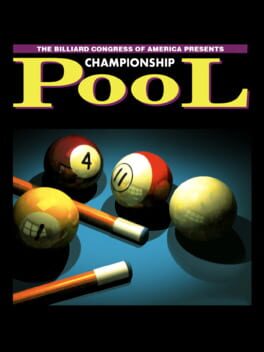
Compete in realistic 8‑ball and 9‑ball tournaments from regional to world champion.
Alternatives to Virtual Pool 64
View all →

Compete in realistic pool action on PC and PS2 with friends or solo play
The Verdict
AI-generated from listing dataBoth games offer realistic pool with split‑screen play, but Pool Paradise (B) has higher critic scores and more content, while Virtual Pool 64 (A) focuses on ultra‑real physics and a broader difficulty range.
Key differences
- •Physics realism: A emphasizes ultra‑realistic ball physics; B does not mention physics fidelity.
- •Content breadth: B offers 10 table designs, 11 rule sets, 30 AI opponents, and mini‑games; A offers 9 pool variations and hundreds of AI opponents but fewer visual themes.
- •Critical reception: B has a higher critic score (80) versus A's 58.
- •Release date & platform: A released 1998, only on PC; B released 2004, platform not specified but likely broader.
- •Price information: B lists a $19.99 MSRP; A’s price is not specified.
Gameplay & fun factor
B provides varied tables, more rule sets, mini‑games and ten tournaments, offering broader fun than A's focus on physics alone.
Platform availability
A is explicitly PC‑only; B's platform not specified, so A has a confirmed platform while B is uncertain.
Price & value
B lists a clear $19.99 price; A's price is not specified, making B the only known value proposition.
Multiplayer / co‑op
Both support single‑player and split‑screen local multiplayer; neither offers online play.
Content & replayability
B includes 10 table designs, 11 rule sets, 30 AI styles, tournaments, and mini‑games; A has many AI opponents but fewer visual or mode variations.
Difficulty & accessibility
A offers three explicit difficulty levels (Amateur, Professional, Championship); B does not specify difficulty tiers.
Graphics & performance
Both are described as having dated graphics; no further distinction provided.
Choose Pool Paradise if…
Players who want more visual variety, rule options, tournaments and a known price point.
Choose Virtual Pool 64 if…
Players who prioritize ultra‑realistic physics and clear difficulty tiers on PC.
Common questions
Which game has better critical reception?
Pool Paradise (B) has a critic score of 80/100, while Virtual Pool 64 (A) scored 58/100.
Is online multiplayer available in either game?
No; both only support single‑player and split‑screen local multiplayer.
What is the price of each game?
Pool Paradise is listed at $19.99; Virtual Pool 64's price is not specified in the provided data.