



Pillars of Eternity vs SaGa Frontier 2
Side-by-side comparison of features, pricing, ratings, and alternatives.
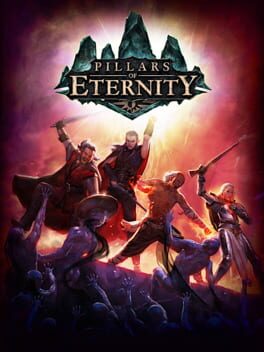
Prepare to be enchanted by a world where the choices you make and the paths you choose shape your destiny. Recapture the deep sense of exploration, the joy of a pulsating adventure, and the thrill of leading your own band of companions across a new fantasy realm and into the depths of monster-infested dungeons in search of lost treasures and ancient mysteries. So gather your party, venture forth, and embrace adventure as you delve into a realm of wonder, nostalgia, and the excitement of classic RPGs with Obsidian's Pillars of Eternity. Experience tactical real-time-with-pause combat and a rich, reactive story penned by veteran role-playing game creators.
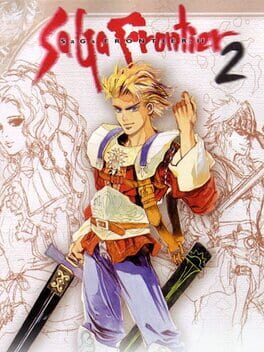
SaGa Frontier 2 lets you control decisive moments across decades of royal conflict, guiding characters like exiled Prince Gustave XIII and treasure hunter William Knights through a living, evolving saga. Their intertwined stories feature birth, growth, and death, with choices that reshape the kingdom and its crown. Experience hand‑painted watercolor visuals, strategic duel, team, and battle modes, and a deep combat system that blends realistic sword maneuvers with powerful magic, allowing hundreds of combo attacks.
- Deep, reactive narrative with memorable companions
- Tactical and rewarding real-time-with-pause combat system
- Rich atmospheric world reminiscent of classic isometric RPGs
- Extensive character customization and build variety
- Rich, branching storyline
- Stunning hand‑painted visuals
- Deep combat system with combos
- High replay value
- Heavy amounts of reading and exposition may deter casual players
- Steep learning curve for newcomers to classic tactical CRPGs
- Inventory and micro-management can occasionally feel cumbersome
- Limited to single‑player
- Complex UI may overwhelm newcomers
- Older graphics compared to modern titles
More alternatives & similar tools
Alternatives to Pillars of Eternity
View all →
Alternatives to SaGa Frontier 2
View all →
Recapture the deep sense of exploration and classic RPG adventure in a new fantasy realm.
The Verdict
AI-generated from listing dataPillars of Eternity offers modern graphics, a lower price, and classic tactical combat, while SaGa Frontier 2 provides a sandbox‑style, branching narrative with higher replay value but at a higher cost and older visuals.
Key differences
- •Price: $29.99 (A) vs $59.99 (B).
- •Graphics era: 2015 modern engine (A) vs 1999 hand‑painted style (B).
- •Replayability: SaGa’s Multi‑Scenario system and multiple endings (B) vs Pillars’ single‑path narrative with choices (A).
- •Combat depth: Pillars uses real‑time‑with‑pause tactical fights (A); SaGa offers combo‑based strategic modes and duel/team battles (B).
- •Content volume: Pillars includes base management and extensive character customization (A); SaGa focuses on generational story tracking (B).
Pricing & value
Pillars costs $29.99, half the price of SaGa’s $59.99, offering better price‑to‑content ratio.
Graphics & performance
Released in 2015 with modern graphics; SaGa’s 1999 hand‑painted visuals are dated.
Content & replayability
SaGa’s Multi‑Scenario system and multiple endings give higher replay potential than Pillars’ single‑path story.
Gameplay & fun factor
Both offer deep tactical combat—Pillars with real‑time‑pause, SaGa with combo‑based strategic modes.
Difficulty & accessibility
Both have steep learning curves: Pillars heavy reading, SaGa complex UI; neither is clearly easier.
Multiplayer / co‑op
Both are single‑player only.
Platform availability
Pillars is a modern PC/console release; SaGa was originally a 1999 console title with limited modern ports.
Choose Pillars of Eternity if…
Buyers who want modern graphics, lower price, and classic tactical CRPG experience.
Choose SaGa Frontier 2 if…
Buyers who prioritize sandbox storytelling, high replay value, and don’t mind older graphics.
Common questions
Which game is cheaper?
Pillars of Eternity costs $29.99, while SaGa Frontier 2 costs $59.99.
Which title has more modern graphics?
Pillars of Eternity (2015) uses a modern engine; SaGa Frontier 2 (1999) features older hand‑painted visuals.
Which game offers more replayability?
SaGa Frontier 2’s Multi‑Scenario system and multiple endings give higher replay value than Pillars’ single‑path narrative.