



Game Party: In Motion vs MotionSports: Play for Real
Side-by-side comparison of features, pricing, ratings, and alternatives.
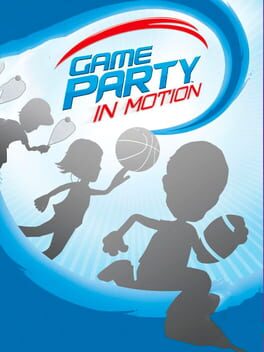

Game Party: In Motion brings a collection of arcade, sports, and party mini‑games to the Xbox 360, designed exclusively for Kinect motion controls. Players can jump, swing, and dance their way through a variety of fast‑paced challenges that are easy to pick up and play. The title supports single‑player, multiplayer, co‑operative, and split‑screen modes, making it a versatile choice for family gatherings, friends’ get‑togethers, or casual gaming sessions at home.
MotionSports brings a collection of popular sports to the Xbox 360, using the Kinect sensor to let players swing, kick, and throw with their own bodies. The game offers both single‑player challenges and multiplayer matches for friends and family. Designed by Ubisoft Milan, the title was one of the first Kinect releases in 2010, delivering quick‑play mini‑games and realistic physics while encouraging physical activity. Reception was mixed, but it remains a notable early example of motion‑based gaming.
- Innovative Kinect motion controls
- Wide variety of arcade and sports mini‑games
- Supports up to four players locally
- Family‑friendly content and rating
- Intuitive motion controls for all ages
- Variety of sports mini‑games
- Local multiplayer supports up to four players
- Short session length encourages casual play
- Very low critic score indicating poor reception
- Limited depth for hardcore gamers
- Requires Kinect accessory, limiting platform use
- Mixed critical reception and limited depth
- Requires Kinect peripheral, limiting platform availability
- Occasional tracking inaccuracies in fast motions
More alternatives & similar tools
Alternatives to Game Party: In Motion
View all →
Alternatives to MotionSports: Play for Real
View all →
The Verdict
AI-generated from listing dataGame Party: In Motion offers far more mini‑games and family‑friendly co‑op, but is poorly received; MotionSports has a higher critic score and a teen rating but fewer described modes.
Key differences
- •A includes over 30 mini‑games with split‑screen and co‑op; B mentions only a few sports modes.
- •Critic scores differ sharply: A 10/100 vs B 50/100.
- •Age rating: A ESRB E (everyone) vs B ESRB T (teen).
- •B lists a concrete MSRP ($59.99); A’s price is not provided.
- •A offers adjustable difficulty per mini‑game; B notes occasional tracking issues in fast motions.
Gameplay & fun factor
A provides 30+ varied arcade and sports mini‑games versus B’s limited sport set.
Content & replayability
A has leaderboards, adjustable difficulty, and split‑screen; B focuses on short sessions with fewer titles.
Multiplayer / co‑op
A supports up to four players split‑screen and co‑operative challenges; B supports up to four but no split‑screen detail.
Difficulty & accessibility
A offers adjustable difficulty for all ages; B notes occasional tracking inaccuracies and no explicit difficulty scaling.
Price & value
B costs $59.99; A’s price is not specified, preventing a direct value comparison.
Platform availability
Both require the Kinect peripheral, limiting them to Kinect‑compatible Xbox platforms.
Graphics & performance
No graphics or performance details are provided for either title.
Choose Game Party: In Motion if…
Families wanting a wide, kid‑friendly party game with local co‑op despite low reviews.
Choose MotionSports: Play for Real if…
Sports‑oriented players comfortable with a teen rating who prefer a higher‑scored Kinect title.
Common questions
What is the price of each game?
B costs $59.99; A’s price is not specified in the provided information.
Do both games require Kinect?
Yes, both titles need the Kinect peripheral.
How do the critical receptions compare?
A received a critic score of 10/100, while B received 50/100.