



Final Fight Revenge vs Super Smash Bros.
Side-by-side comparison of features, pricing, ratings, and alternatives.
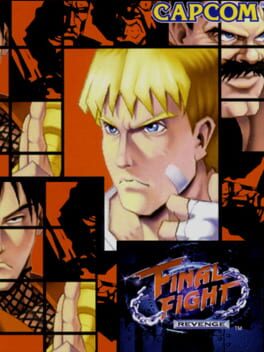
Final Fight Revenge is a 1999 3D one-on-one fighting game developed by Capcom USA for arcade hardware running on the Sega ST-V board. Players can select from a roster of iconic characters from the Final Fight universe to engage in fast-paced martial arts combat. The game later received a Japan-exclusive home port for the Sega Saturn in March 2000, marking the final official Capcom release for that console. It stands out as the only sequel in the Final Fight franchise specifically built for the arcade fighting game genre.
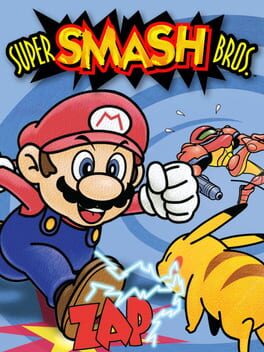
Super Smash Bros. is a crossover fighting video game featuring characters from several different Nintendo franchises, marking the first installment in the celebrated series. Unlike traditional fighting games that rely on depleting an opponent's life bar, players must knock opposing characters off the stage while managing a damage percentage meter. Developed by HAL Laboratory and published by Nintendo, the game combines frantic multiplayer action with familiar items and power-ups. It supports various gameplay modes, allowing both solo players and groups to enjoy fast-paced, platform-style combat across stages themed after classic Nintendo universes.
- Features iconic characters from the classic Final Fight beat 'em up series
- Rare historical piece as Capcom USA's 1999 arcade fighting project
- Includes language options for English within the Sega Saturn port
- Brings beloved urban brawler fighters into a 3D one-on-one combat format
- Unique knockout-based fighting mechanic replaces standard health bars
- Familiar and beloved roster of Nintendo franchise characters
- Engaging multiplayer and party-friendly gameplay modes
- Dynamic items and power-ups add unpredictable fun to matches
- The Sega Saturn home version was officially released exclusively in Japan
- The planned Sega Dreamcast port was ultimately cancelled during development
- Graphics and mechanics show their age compared to modern 3D fighting games
- Limited single-player content compared to later entries
- Unlocking all secret characters requires completing specific prerequisites
- Can feel unbalanced for hardcore competitive play due to random items
More alternatives & similar tools
Alternatives to Final Fight Revenge
View all →
Battle through the gritty streets of Metro City to rescue your brother Cody.
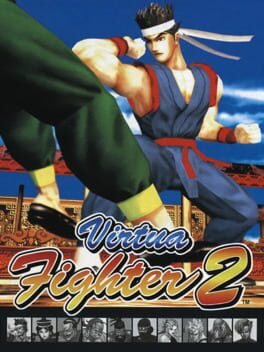
Sega's groundbreaking 3D fighting game featuring advanced graphics and multi-tiered arenas.
Alternatives to Super Smash Bros.
View all →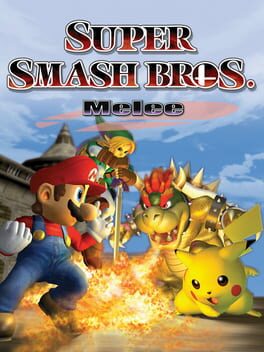
A fast-paced crossover platform fighting game featuring beloved Nintendo characters.
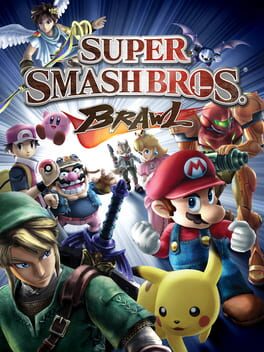
The legendary third installment featuring iconic characters and Final Smashes.
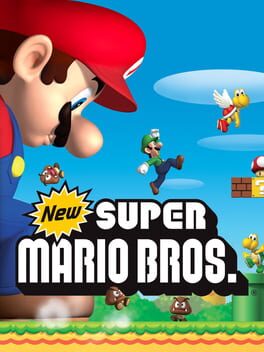
Classic Mario platforming reborn with fresh power-ups and multiplayer fun.
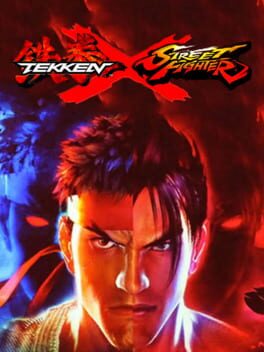
Ultimate crossover where Tekken meets Street Fighter in brutal combat.
The Verdict
AI-generated from listing dataSuper Smash Bros. offers broader, party‑friendly multiplayer with a beloved Nintendo roster, while Final Fight Revenge is a niche 1999 3D fighter with limited availability.
Key differences
- •Super Smash Bros. supports split‑screen multiplayer for groups; Final Fight Revenge only offers local two‑player.
- •Smash uses a knockout damage system and dynamic items; Revenge uses traditional health bars and static 3D combat.
- •Smash is widely released worldwide (1999) with a $49.99 MSRP; Revenge’s Saturn version is Japan‑only and the Dreamcast port was cancelled.
- •Smash includes many Nintendo stages and characters; Revenge features only Final Fight characters.
- •Smash has a higher critic score (85/100) versus no listed score for Revenge.
Gameplay & fun factor
Smash’s knockout mechanic and random items create unpredictable, party‑style fun; Revenge’s dated 3D combat is less dynamic.
Platform availability
Smash released globally on Nintendo hardware; Revenge is limited to a Japan‑only Saturn version and cancelled Dreamcast port.
Price & value
Smash has a clear $49.99 MSRP; Revenge’s price is not specified and limited to a rare import.
Multiplayer / co‑op
Smash supports single‑player, multiplayer, co‑op, and split‑screen; Revenge only offers single‑player and two‑player.
Content & replayability
Smash offers a large roster, many stages, items, and challenges; Revenge has a single roster and limited modes.
Difficulty & accessibility
Smash is rated E/PEGI 7 and designed for casual play; Revenge’s older mechanics may be harder for newcomers.
Graphics & performance
Revenge uses 3D models on original arcade hardware; Smash is 2D sprite‑based but optimized for Nintendo consoles.
Choose Final Fight Revenge if…
Retro arcade collectors or fans of obscure 1999 Capcom fighting titles.
Choose Super Smash Bros. if…
Casual gamers, Nintendo fans, or groups seeking party multiplayer.
Common questions
Which game is cheaper to buy today?
Super Smash Bros. has a listed MSRP of $49.99; Final Fight Revenge’s price is not specified and only available as a rare Japan‑only import.
Can I play both games with friends locally?
Yes for Smash (supports split‑screen multiplayer); Revenge only supports two‑player local matches.
Which title has more content to keep me playing?
Super Smash Bros. offers a larger roster, many stages, items, and single‑player challenges, whereas Revenge has a limited character list and modes.