



Dance Dance Revolution vs Osu!
Side-by-side comparison of features, pricing, ratings, and alternatives.
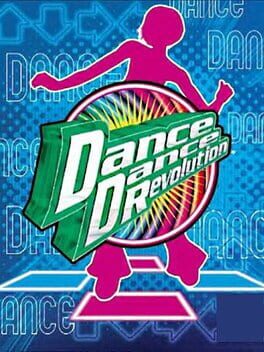

Dance Dance Revolution is a pioneering music video game where players stand on a dance platform and hit colored arrows in time with the music. Introduced in 1998 by Konami's Bemani team, it sparked a global rhythm and dance genre across arcades and home consoles. The game features a vast library of original and licensed tracks, multiple difficulty levels, and both single‑player and multiplayer modes, rewarding precise timing with detailed score judgments and encouraging physical fitness and social play.
Osu! is an open‑source rhythm game created by Dean Herbert in 2007. Players click circles, slide, spin, or hit notes in time with music using a cursor, tablet, keyboard, or touch input. The game offers four distinct rulesets—standard, taiko, catch, and mania—each providing a different style of play. Community‑made beatmaps keep the library constantly expanding, and global leaderboards track performance points across single‑player and multiplayer modes.
- Engaging physical activity
- Large and diverse song list
- Supports both solo and group play
- Clear, responsive scoring system
- Free to download and play
- Cross‑platform support
- Large, constantly expanding beatmap library
- Multiple distinct rulesets for varied gameplay
- Requires a compatible dance pad accessory
- Arcade versions can be costly to maintain
- Limited narrative or story content
- Steep learning curve for advanced maps
- Performance can vary on low‑end hardware
- Limited official support; relies on community
More alternatives & similar tools
Alternatives to Dance Dance Revolution
View all →
Step into the rhythm with DDR's iconic 5th Mix arcade experience.
Step up the beat with DDRMax 6thMix, the arcade classic with Freeze Arrows.

Alternatives to Osu!
View all →
The Verdict
AI-generated from listing dataIf you want a low‑cost, cross‑platform rhythm game with endless community tracks, Osu! is the safer default; if you prefer a physical, arcade‑style dance experience and are willing to buy a pad, DDR is the choice.
Key differences
- •DDR requires a dedicated dance pad accessory; Osu! works with mouse, keyboard, tablet or touch.
- •Osu! runs on Windows, macOS, Linux, Android and iOS; DDR is limited to arcade/console hardware.
- •DDR is a paid product ($59.99) while Osu! is free and open‑source.
- •DDR’s song list is fixed (hundreds of tracks); Osu! uses user‑generated beatmaps that grow continuously.
- •DDR offers physical movement and dance‑style gameplay; Osu! is a screen‑based click/press game.
Gameplay & fun factor
DDR provides physical dance activity, which many find more engaging than mouse/keyboard input.
Platform availability
Osu! supports Windows, macOS, Linux, Android and iOS; DDR is limited to arcade/console setups.
Pricing & value
Osu! is free; DDR costs $59.99 plus a required dance pad.
Multiplayer / co‑op
Both offer competitive multiplayer; Osu! adds cooperative rooms, while DDR focuses on head‑to‑head play.
Content & replayability
Osu!’s community‑generated beatmaps provide an ever‑expanding library; DDR’s track list is static.
Difficulty & accessibility
DDR includes multiple difficulty levels for beginners; Osu! has a steep learning curve for advanced maps.
Graphics & performance
DDR features dynamic visual backgrounds; Osu! performance can suffer on low‑end hardware.
Choose Dance Dance Revolution if…
Players who want a physical dance experience and are okay buying a pad.
Choose Osu! if…
Players who want a free, cross‑platform game with limitless community songs.
Common questions
Do I need to buy extra hardware for DDR?
Yes, a compatible four‑arrow dance pad is required in addition to the $59.99 game price.
Can I play Osu! on my phone?
Yes, Osu! runs on Android and iOS as well as desktop operating systems.
Which game has more songs to play?
Osu! has a constantly expanding library of user‑generated beatmaps, while DDR’s catalog is limited to its built‑in tracks.