



CrystalDiskInfo vs DriveDx
Side-by-side comparison of features, pricing, ratings, and alternatives.
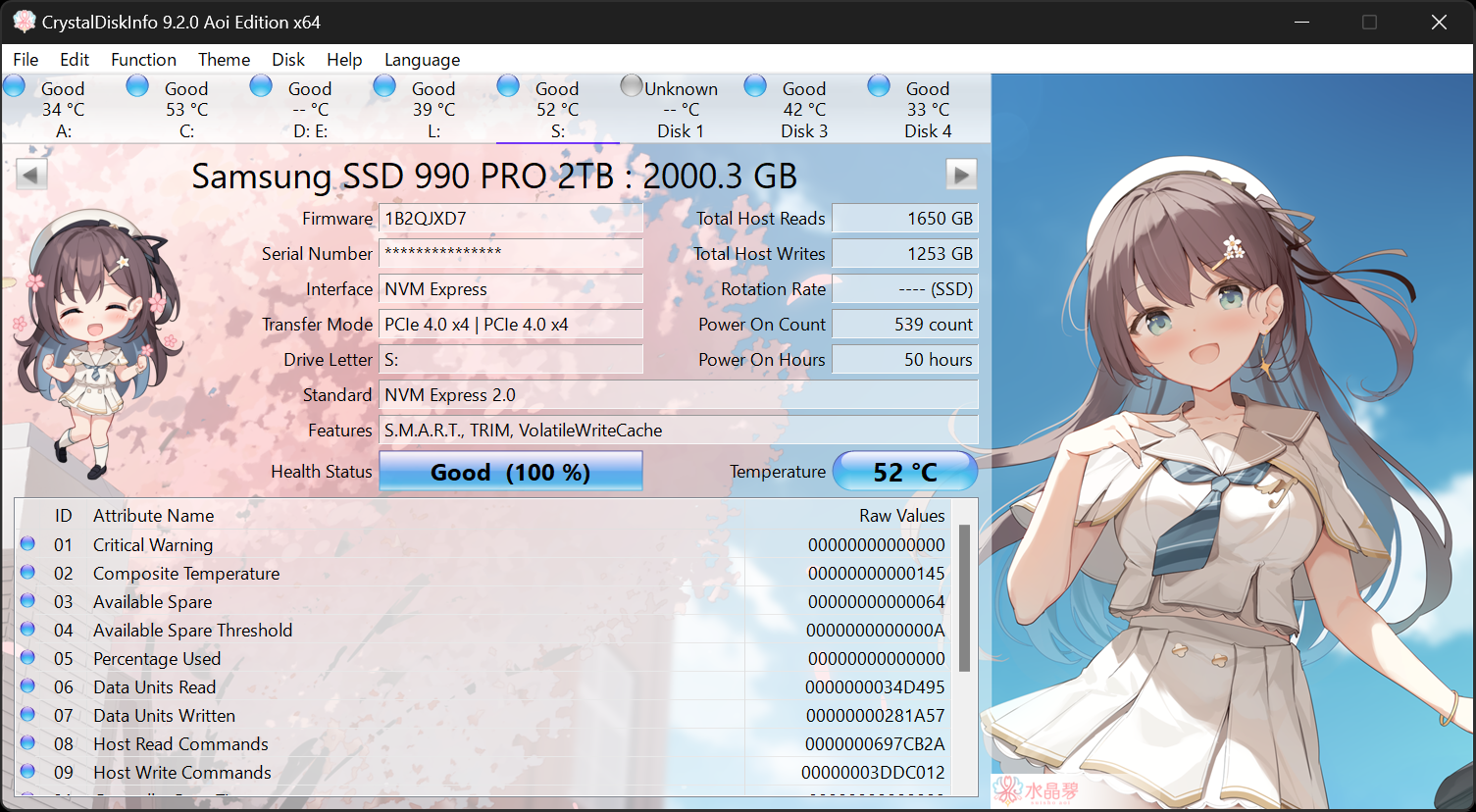
CrystalDiskInfo is a widely used disk health monitoring utility designed to help users keep track of the status and performance of their storage drives. By reading S.M.A.R.T. values, it provides detailed information about hard disk drives, solid-state drives, and NVMe storage. The software features customizable alert systems, graphical temperature representations, and support for various external USB and RAID configurations. Its user-friendly interface makes it easy for both casual users and system administrators to detect potential drive failures before data loss occurs.
DriveDx is a macOS utility that continuously analyzes S.M.A.R.T. attributes and other health indicators for internal and external hard drives and SSDs, flagging each drive as OK, Failing, or Failed. The goal is to surface early warning signs of drive failure while there's still time to back up data, rather than discovering a dead drive after the fact. It runs background monitoring with desktop alerts, offers short and extended self-tests, and calculates separate health and performance ratings using algorithms tuned differently for SSDs versus traditional HDDs. It also supports scheduled email reports for remote or headless Mac monitoring.
- Completely free to use without hidden costs or time limits
- Lightweight resource footprint with minimal background impact
- Supports a massive range of internal and external storage devices
- Provides clear visual indicators for quick health assessment
- Catches early failure warnings before total drive loss
- One-time purchase, not a subscription
- Covers up to 3 personal Macs on one license
- Separate SSD and HDD-aware health algorithms
- User interface can feel dated or utilitarian
- Limited advanced diagnostic repair tools built into the app
- Windows-focused with no native desktop app for macOS or Linux
- Mac only, no Windows version
- Cannot repair a drive, only detects and warns of problems
- S.M.A.R.T. data isn't always reliable on every external enclosure or controller
More alternatives & similar tools
Alternatives to CrystalDiskInfo
View all →
Alternatives to DriveDx
View all →The Verdict
AI-generated from listing dataCrystalDiskInfo is a free, Windows‑focused utility with broad device support, while DriveDx is a paid, macOS‑only tool offering deeper health algorithms and alerts.
Key differences
- •Operating system: CrystalDiskInfo runs on Windows; DriveDx runs on macOS only.
- •Cost model: CrystalDiskInfo is free and open source; DriveDx requires a one‑time purchase.
- •Alerting: DriveDx provides real‑time desktop alerts and scheduled email reports; CrystalDiskInfo only offers optional email/sound alerts.
- •Testing features: DriveDx can launch manufacturer short and extended self‑tests; CrystalDiskInfo lacks built‑in testing tools.
- •Support: DriveDx offers email support and a knowledge base; CrystalDiskInfo relies on community forums and documentation.
Pricing & value
CrystalDiskInfo is completely free, whereas DriveDx requires a one‑time paid license.
Ease of use / learning curve
DriveDx’s macOS UI and built‑in alerts are tailored for Mac users, while CrystalDiskInfo’s dated UI may feel utilitarian.
Features & depth
DriveDx includes self‑test execution, separate SSD/HDD algorithms, and email reporting; CrystalDiskInfo offers basic health/temperature monitoring only.
Integrations & ecosystem
CrystalDiskInfo supports a wide range of interfaces (NVMe, SATA, external) and many devices; DriveDx is limited to internal and USB/eSATA drives on Mac.
Support
DriveDx provides direct email support and a knowledge base; CrystalDiskInfo relies on community forums.
Choose CrystalDiskInfo if…
Windows users or admins needing a free, lightweight health monitor for many drive types.
Choose DriveDx if…
Mac users willing to pay for richer alerts, self‑tests, and dedicated support.
Common questions
Can I use CrystalDiskInfo on a Mac?
No, it is Windows‑focused with no native macOS desktop app.
Does DriveDx allow me to run drive self‑tests?
Yes, it can launch manufacturer‑style short and extended self‑tests directly from the app.
Which tool is free?
CrystalDiskInfo is free; DriveDx requires a one‑time purchase.