



Cities XL vs SimCity 2000
Side-by-side comparison of features, pricing, ratings, and alternatives.
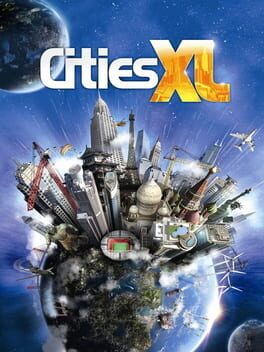
Cities XL lets players craft detailed cities on realistic 3D maps, balancing social services, employment, and leisure to keep citizens happy. The game offers a variety of environments—from mountains to beaches—and architectural styles from around the world. Players can design everything from residential neighborhoods to transit systems, while competing or cooperating in single‑player, multiplayer, and MMO modes for endless urban challenges.
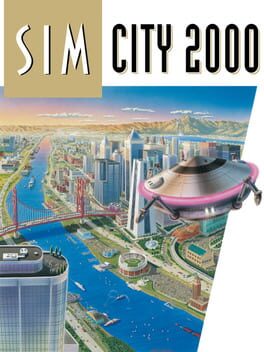
SimCity 2000 lets you design sprawling urban landscapes with detailed zoning, transportation, and utilities. The game offers deep strategic depth while remaining accessible for newcomers to city‑building. Featuring an isometric view and a robust set of tools, you can shape terrain, respond to disasters, and watch your city evolve over decades. Its timeless sandbox experience continues to inspire modern simulation titles.
- Extensive 3D map variety
- Deep economic and social simulation
- Robust multiplayer and MMO options
- Wide range of architectural styles
- Deep zoning and infrastructure options
- Rich variety of disasters add strategic challenge
- Extensive mod and custom map support
- Timeless isometric visual style
- Steep learning curve for beginners
- Performance can lag on large maps
- Limited mod support
- Outdated graphics by modern standards
- Limited AI traffic behavior
- No native multiplayer mode
More alternatives & similar tools
Alternatives to Cities XL
View all →
Build, manage, and evolve your own metropolis in the ultimate city‑building simulation.
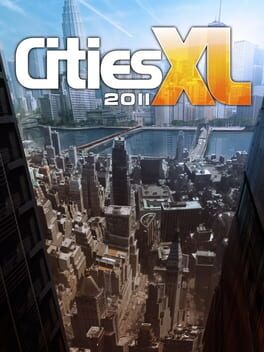
Build and design sprawling metropolises and diverse cities on a realistic planetary scale.
Alternatives to SimCity 2000
View all →
Build, manage, and protect your own metropolis on the dual screens of the Nintendo DS.
The Verdict
AI-generated from listing dataCities XL offers modern 3D graphics, climate effects, and multiplayer options but has a steep learning curve, while SimCity 2000 provides classic 2D gameplay, extensive mod support, and simpler single‑player focus.
Key differences
- •Graphics: Cities XL uses fully rendered 3D terrain; SimCity 2000 uses isometric 2D graphics.
- •Multiplayer: Cities XL supports single‑player, local multiplayer, and MMO; SimCity 2000 is single‑player only.
- •Mod/Custom content: SimCity 2000 explicitly supports extensive mod and custom map creation; Cities XL has limited mod support.
- •Learning curve: Cities XL is noted as steep for beginners; SimCity 2000’s classic interface is generally more approachable.
- •Release era: Cities XL (2009) includes climate and modern economic simulation; SimCity 2000 (1993) lacks those features.
Gameplay & fun factor
Cities XL adds climate, 3D terrain, and MMO layers, expanding gameplay beyond SimCity 2000's classic zoning.
Platform availability
Both are PC titles with no platform differences specified.
Price & value
Both priced at $49.99 one‑time purchase.
Multiplayer / co‑op
Cities XL includes single‑player, local multiplayer, and MMO; SimCity 2000 is single‑player only.
Content & replayability
SimCity 2000 offers extensive mod and custom map support, enhancing replayability; Cities XL has limited mod support.
Difficulty & accessibility
Cities XL is described as having a steep learning curve, whereas SimCity 2000 is less intimidating.
Graphics & performance
Cities XL features fully rendered 3D terrain and varied climates; SimCity 2000 uses older isometric graphics.
Choose Cities XL if…
Players who want modern 3D visuals, climate effects, and multiplayer/ MMO experiences.
Choose SimCity 2000 if…
Players who prefer classic 2D style, extensive modding, and a simpler single‑player experience.
Common questions
Do either games support multiplayer?
Cities XL supports single‑player, local multiplayer, and MMO; SimCity 2000 is single‑player only.
Which game has more community‑created content?
SimCity 2000 explicitly supports extensive mod and custom map creation; Cities XL has limited mod support.
Is the price different between the two?
Both are priced at $49.99 as a one‑time purchase.