



Chrome Remote Desktop vs NoMachine
Side-by-side comparison of features, pricing, ratings, and alternatives.

Chrome Remote Desktop is Google's free remote access service, letting users connect to their own computer from another device or give someone temporary access for support and collaboration. Built on WebRTC, it runs through the Chrome browser or a lightweight companion app, with no license fee for personal or ad-hoc use.
NoMachine is a remote access application that lets users connect to and control another computer over the internet or a local network, built around the company's proprietary NX protocol tuned for low-latency, high-definition remote sessions. Beyond basic screen sharing, it supports remote file transfer, printing, audio streaming, and terminal/shell access, and can run through a standard web browser as well as its native desktop and mobile clients. The product line spans a free non-commercial edition for personal use, a paid Personal Edition with support for individuals and small commercial use, and Enterprise products (Enterprise Desktop, Terminal Server, Cloud Server) aimed at organizations that need centralized deployment, unlimited concurrent connections, VPN access, and two-factor authentication. It is widely used for remote IT support, accessing home or lab machines while traveling, and enterprise virtual desktop delivery.
- Completely free with no license or subscription cost
- Very simple setup compared to full remote-support suites
- Works cross-platform between desktop and mobile devices
- Backed by Google's infrastructure and account security
- Noticeably fast and responsive compared to many remote desktop tools, even on modest connections
- Works across Windows, Mac, and Linux with consistent behavior
- Free tier available for genuine personal, non-commercial use
- Flexible deployment from a single home PC up to enterprise terminal servers
- Lacks advanced features like file transfer, multi-monitor switching, or session recording found in paid tools
- Requires Chrome or Google account sign-in, limiting flexibility for non-Google environments
- No centralized admin console for managing many endpoints, unlike enterprise remote tools
- Performance depends heavily on both ends' internet connection quality
- The free edition is restricted to non-commercial personal use only
- Enterprise features like unlimited connections require paid licensing
- Initial firewall/router configuration can be fiddly for direct (non-cloud) connections
More alternatives & similar tools
Alternatives to Chrome Remote Desktop
View all →

Alternatives to NoMachine
View all →Free cross-platform remote desktop tool for work, gaming, and creative access from any device.
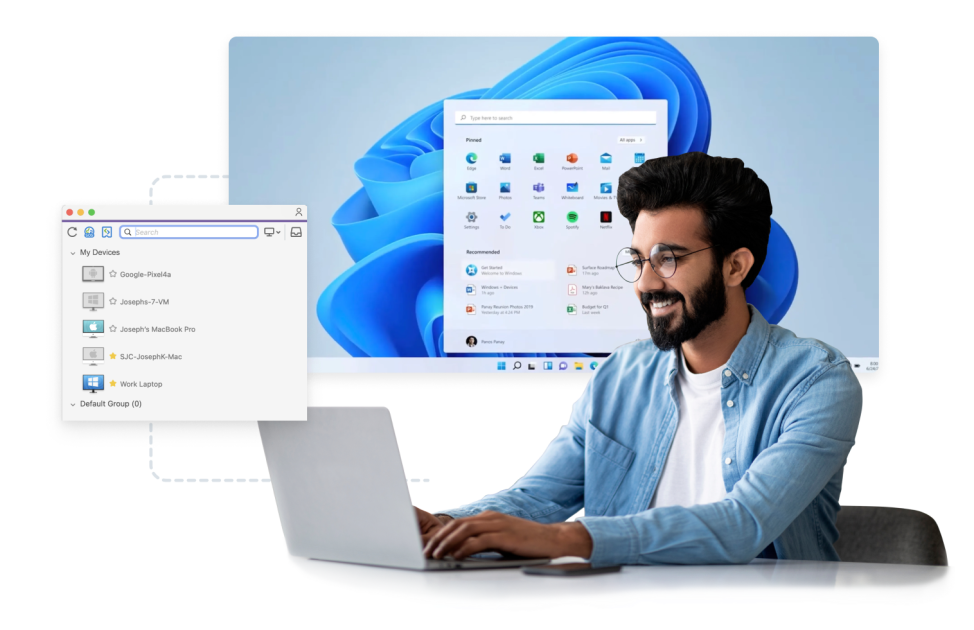
Secure remote access and support software for individuals, teams, and IT departments.
Google's free tool for remotely accessing a computer or sharing your screen.
The Verdict
AI-generated from listing dataNoMachine offers higher performance and richer enterprise features but limits free use to personal, non‑commercial scenarios, while Chrome Remote Desktop is completely free and ultra‑simple but lacks advanced capabilities.
Key differences
- •Performance: NoMachine’s proprietary NX protocol delivers low‑latency, high‑definition sessions; Chrome Remote Desktop relies on WebRTC and is slower on modest links.
- •Licensing: NoMachine’s free tier is personal‑only and enterprise features require paid licenses; Chrome Remote Desktop is fully free for any use.
- •Feature depth: NoMachine includes file sharing, printing, audio, terminal access, session recording, and multi‑user guest sharing; Chrome Remote Desktop lacks file transfer, multi‑monitor, and recording.
- •Setup complexity: NoMachine may need firewall/router tweaks for direct connections; Chrome Remote Desktop installs a small host app and works via Chrome with minimal configuration.
- •Deployment model: NoMachine is a desktop‑app‑based solution; Chrome Remote Desktop runs as a cloud/SaaS service through the browser.
Pricing & value
Chrome Remote Desktop is completely free; NoMachine’s enterprise features require paid licensing.
Ease of use / learning curve
Chrome Remote Desktop has simple PIN/Google sign‑in setup; NoMachine may need firewall configuration.
Features & depth
NoMachine provides file sharing, printing, audio, terminal access, session recording, and guest sharing; Chrome Remote Desktop lacks these.
Integrations & ecosystem
Chrome Remote Desktop integrates with Google accounts and Chrome; NoMachine offers no API or broader ecosystem.
Collaboration
NoMachine supports guest desktop sharing and screen recording for collaboration; Chrome Remote Desktop does not.
Scalability
NoMachine scales from a single PC to enterprise terminal servers; Chrome Remote Desktop is limited to individual connections.
Support
NoMachine provides email, knowledge base, and forum; Chrome Remote Desktop only offers Google Help Center.
Security & privacy
NoMachine offers two‑factor authentication and TLS/AES encryption; Chrome Remote Desktop uses WebRTC encryption but no 2FA.
Migration / lock‑in
Both are proprietary, non‑open source with no API; migration requires manual re‑setup.
Choose Chrome Remote Desktop if…
Individuals or small teams needing simple, free remote access without advanced features or licensing constraints.
Choose NoMachine if…
Enterprises or power users needing high performance, advanced features, and multi‑user collaboration, willing to pay for licenses.
Common questions
Is there any cost for using either tool?
NoMachine is freemium—free for personal, non‑commercial use but enterprise features require payment; Chrome Remote Desktop is completely free.
Which tool offers better performance on low‑bandwidth connections?
NoMachine’s proprietary NX protocol is designed for low‑latency, high‑definition performance even on modest connections, unlike Chrome Remote Desktop’s WebRTC.
Can I transfer files between local and remote machines?
Yes with NoMachine (supports remote file sharing); Chrome Remote Desktop does not provide file transfer capability.