



Centre Court Tennis vs Mario Tennis
Side-by-side comparison of features, pricing, ratings, and alternatives.
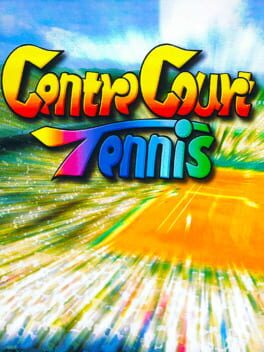
Centre Court Tennis lets you build a quirky Lego‑like avatar and hit the court for casual, fast‑paced tennis action. The game balances traditional match play with wacky mini‑games that keep the fun rolling. Enjoy multiplayer split‑screen for up to four players, tournament and exhibition modes, and earn special prizes by mastering the unique mini‑games scattered across the court.
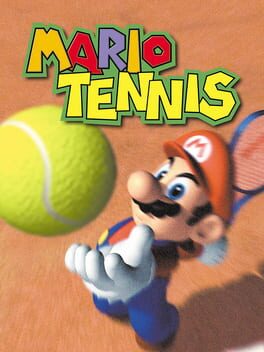
Step onto the court with Mario, Luigi, Bowser, Peach, Toad, Donkey Kong and more in this fast‑paced tennis showdown. The game blends arcade flair with classic tennis mechanics, letting you unleash powerful smashes, tricky lobs, and electrifying super‑charged shots. Designed for both solo play and chaotic split‑screen fun, Mario Tennis offers a 14‑player roster, intuitive controls, and a vibrant Mario‑themed world that keeps every match fresh and exciting.
- Easy-to-learn controls suitable for all ages.
- Local split‑screen supports up to four players.
- Variety of mini‑games keeps gameplay fresh.
- Lighthearted tone adds humor to tennis.
- Easy to pick up for all ages
- Vibrant Mario-themed visuals
- Varied character abilities
- Exciting super‑charged smash mechanics
- Limited to PC platform only.
- No online multiplayer options.
- Graphics are dated by modern standards.
- Limited online functionality
- Graphics dated by modern standards
- No official cross‑platform play
More alternatives & similar tools
Alternatives to Centre Court Tennis
View all →


Alternatives to Mario Tennis
View all →
A lighthearted tennis showdown with Lego‑style characters and fun mini‑games.
The Verdict
AI-generated from listing dataBoth are lighthearted, family‑friendly tennis games with local split‑screen multiplayer, but Centre Court Tennis is PC‑only and older, while Mario Tennis adds iconic characters and more shot variety.
Key differences
- •Platform: Centre Court Tennis runs only on PC; Mario Tennis is not limited to PC (platform not specified, but not PC‑only).
- •Character roster: Mario Tennis offers 14 recognizable Mario franchise characters; Centre Court Tennis uses generic Lego‑style avatars.
- •Gameplay depth: Mario Tennis includes multiple shot types, power‑up items, and customizable match settings; Centre Court Tennis focuses on mini‑games and a tournament mode.
- •Release era: Centre Court Tennis released 1998, Mario Tennis 2000, making Mario Tennis slightly newer.
- •Multiplayer scope: Both support up to 4 local players, but Mario Tennis also lists co‑operative mode (though specifics not detailed).
Gameplay & fun factor
Mario Tennis provides varied shot types, power‑ups, and customizable settings, offering deeper arcade tennis experience.
Platform availability
Centre Court Tennis is limited to PC; Mario Tennis does not state a platform restriction, implying broader availability.
Price & value
Both are paid one‑time purchases; no price differences are given.
Multiplayer / co‑op
Both support up to 4 players locally via split‑screen; neither offers online multiplayer.
Content & replayability
Centre Court Tennis includes four distinct mini‑games and a tournament mode, adding varied short‑play options.
Difficulty & accessibility
Both target casual, family audiences with easy‑to‑learn controls; no difficulty metrics provided.
Graphics & performance
Both are noted as having dated graphics; no further distinction is provided.
Choose Centre Court Tennis if…
Buyers who want PC‑only, mini‑game variety, and a simple tournament structure.
Choose Mario Tennis if…
Buyers who prefer iconic characters, deeper shot mechanics, and potentially broader platform support.
Common questions
Can I play either game online with friends?
No. Both only support local split‑screen multiplayer; online play is not offered.
Which game has more character variety?
Mario Tennis lists a 14‑character lineup from the Mario franchise; Centre Court Tennis uses customizable Lego‑style avatars.
Is either game available on consoles?
Centre Court Tennis is PC‑only; Mario Tennis does not specify a platform limitation, suggesting it may be available beyond PC.