



BioLite CampStove 2 vs Camp Chef Everest 2X Camping Stove
Side-by-side comparison of features, pricing, ratings, and alternatives.

The BioLite CampStove 2 is a portable wood-burning stove that converts heat from a fire into usable electricity, letting you charge phones, lights, and other USB devices while you cook. Its integrated fan improves combustion efficiency, producing less smoke and more heat for faster cooking. Designed for outdoor enthusiasts, the CampStove 2 includes a built‑in USB port, a detachable 2.5‑liter pot, and a rugged, weather‑resistant housing, making it ideal for camping, backpacking, and emergency preparedness.
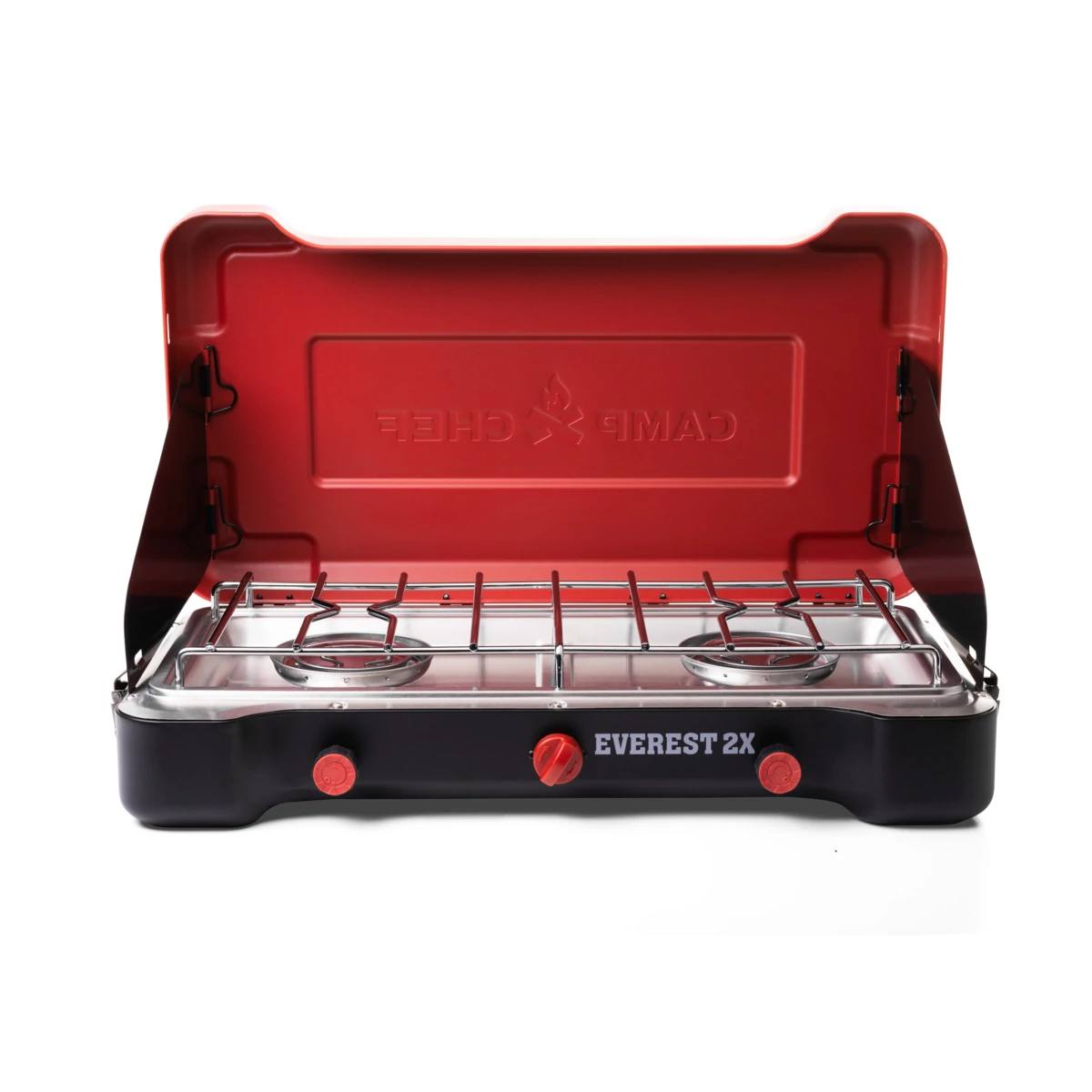
The Everest 2X is the two-burner stove in Camp Chef's Mountain Series, and the numbers are the reason it keeps winning comparisons: 20,000 BTU per burner is roughly double what most portable camp stoves manage, which is the difference between boiling a pot of water in a reasonable time and waiting around at a campsite in the wind. It packs 215 square inches of cooking space into a case that stays lightweight and portable, and uses matchless ignition so there is no fumbling with a lighter in bad weather. Camp Chef cites reviews naming it Best Overall Camping Stove from GearLab and GearJunkie and Best 2-Burner Stove from Outdoor Life, and the stove sits within a Mountain Series range that includes compact stoves and matching accessories, covers and carry bags.
- Generates electricity while cooking
- Low smoke and efficient combustion
- Lightweight and compact for backpacking
- No need for propane or gas canisters
- Genuinely high output for a portable stove
- Enough surface for two full-size pans
- Matchless ignition works in poor weather
- Widely recommended in independent gear reviews
- Limited power output (only for small devices)
- Requires dry wood for optimal performance
- Initial cost higher than basic camp stoves
- High BTU output consumes propane faster
- Larger and heavier than minimalist backpacking stoves
- Wind performance still benefits from a separate windscreen
More alternatives & similar tools
Alternatives to BioLite CampStove 2
View all →Two-burner portable camp stove with 20,000 BTU per burner and 215 square inches of cook space.
Alternatives to Camp Chef Everest 2X Camping Stove
View all →
Compact, fold‑flat grill with 285 sq in cooking space for on‑the‑go grilling.
The Verdict
AI-generated from listing dataThe Camp Chef Everest 2X offers double‑burner high‑BTU cooking power for larger meals but uses propane and is heavier, while the BioLite CampStove 2 provides low‑smoke wood‑fuel cooking with USB power generation, ideal for lightweight backpacking.
Key differences
- •Fuel type: propane canisters (A) vs. wood (B).
- •Cooking capacity: two full‑size pans on 215 sq in surface (A) vs. single 2.5 L pot (B).
- •Power output: 20,000 BTU per burner (A) vs. 2.5 W USB charging (B).
- •Weight/size: larger, heavier stove (A) vs. compact 13 × 10 × 7 cm unit (B).
- •Smart connectivity: none (A) vs. optional app integration (B).
Pricing & value
A costs $229.99 versus B at $149, making A $80.99 more expensive.
Cooking capacity
A provides 215 sq in surface for two pans; B only includes a 2.5 L pot.
Energy efficiency & running cost
B burns free wood and generates electricity; A consumes propane, which must be purchased.
Noise level
B operates silently with a built‑in fan; A’s propane burners produce typical flame noise.
Size & footprint
B’s dimensions are 13 × 10 × 7 cm, far smaller than A’s larger, heavier stove.
Features
B offers USB‑C charging and app monitoring; A only has matchless ignition.
Warranty
B includes a 1‑year warranty; A’s warranty not specified.
Choose BioLite CampStove 2 if…
Backpackers or emergency kits prioritizing lightweight, fuel‑free cooking with device charging.
Choose Camp Chef Everest 2X Camping Stove if…
Campers needing high heat for multiple pans and willing to carry propane.
Common questions
Can either stove be used in windy conditions?
A benefits from a separate windscreen; B’s built‑in fan improves combustion but wind protection isn’t specified.
How long does the fuel last on each stove?
A’s high BTU output consumes propane faster; B burns wood, which is free but requires dry twigs.
Is there any smart connectivity?
Only B offers optional app integration and USB‑C smart charging; A has no smart features.