



Amnesia: The Dark Descent vs Gespalten
Side-by-side comparison of features, pricing, ratings, and alternatives.
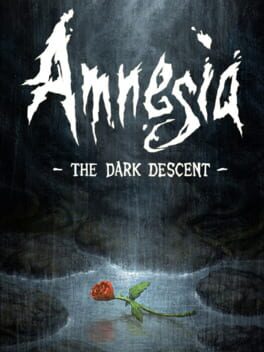
In Amnesia: The Dark Descent, players awaken in a foreboding castle with no memory of how they arrived. The game forces you to explore dark corridors, solve intricate puzzles, and confront nightmarish creatures while managing a sanity meter that reacts to the horrors around you. The experience is built around atmospheric storytelling, immersive sound design, and a relentless sense of dread, delivering a single‑player journey that redefined survival horror when it launched in 2010.
Mikael Herman awakens on Oscarsborg Island in a nightmarish version of April 9, 1940, the day Norway’s forces sank the German cruiser Blücher. Lost between 2010 and the horrors of war, he must navigate a terrifying, puzzle‑filled environment to survive and find his way back to the present.\n\nGespalten blends historical WWII events with psychological horror, offering a single‑player indie experience that challenges players to solve environmental puzzles while confronting the darkness of war’s fear and trauma.
- Deep atmospheric immersion
- Innovative sanity mechanic
- Engaging environmental puzzles
- Strong narrative without combat
- Unique blend of history and horror
- Atmospheric sound and visual design
- Thought‑provoking narrative
- Engaging puzzle mechanics
- Limited replayability after story completion
- No combat may deter action‑focused players
- Occasional performance issues on older hardware
- Limited length may leave some players wanting more
- Linear progression restricts replayability
- Occasional pacing issues in early sections
More alternatives & similar tools
Alternatives to Amnesia: The Dark Descent
View all →
Alternatives to Gespalten
View all →
Uncover a supernatural Nazi conspiracy aboard a Royal Navy submarine in this classic thriller.
A terrifying first‑person horror puzzle adventure that haunts your mind.
The Verdict
AI-generated from listing dataBoth are $19.99 single‑player horror puzzles, but Amnesia offers a classic sanity‑driven experience with broader replay appeal, while Gespalten provides a unique WWII‑time‑shift narrative with historical context.
Key differences
- •Amnesia uses a sanity system and binaural audio; Gespalten focuses on time‑shift mechanics between 1940 and 2010.
- •Amnesia’s setting is a fictional castle with pure psychological horror; Gespalten is set in historically accurate WWII Norway.
- •Amnesia was released in 2010 and has a critic score of 89/100; Gespalten released in 2022 with no critic score listed.
- •Amnesia’s replayability is limited after story completion but has stronger critical acclaim; Gespalten is shorter and more linear, limiting replay value.
Pricing & value
Both games cost $19.99 one‑time purchase.
Gameplay & fun factor
Amnesia adds sanity mechanics, dynamic lighting, and binaural audio, offering deeper immersion than Gespalten’s simpler puzzles.
Platform availability
No platform information provided for either title.
Multiplayer / co‑op
Both are single‑player only.
Content & replayability
Amnesia’s broader critical acclaim and atmospheric depth give it slightly more lasting appeal despite limited replay.
Difficulty & accessibility
No difficulty or accessibility details are given for either game.
Graphics & performance
Performance notes only mention occasional issues for Amnesia on older hardware; Gespalten has no performance info.
Choose Amnesia: The Dark Descent if…
Players who want classic psychological horror with strong immersion and critical praise.
Choose Gespalten if…
Players seeking a short, historically grounded horror story with time‑shift puzzles.
Common questions
Do either of the games support multiplayer?
No, both Amnesia: The Dark Descent and Gespalten are single‑player only.
Which game has received higher critical recognition?
Amnesia has a listed critic score of 89/100; Gespalten has no critic score provided.
Is there a combat system in either title?
Amnesia features no combat, relying on stealth; Gespalten also has no combat mentioned, focusing on puzzles and narrative.