



7 Wonders II vs 7 Wonders of the Ancient World
Side-by-side comparison of features, pricing, ratings, and alternatives.
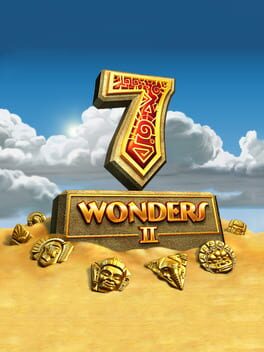
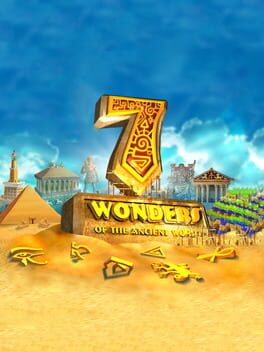
Travel back in time and build iconic wonders like Stonehenge and the Taj Mahal in this engaging match‑3 puzzle adventure. Each level brings new historical settings to life, letting you watch legendary structures rise piece by piece as you solve increasingly challenging puzzles. The game blends classic match‑3 mechanics with an interactive, educational environment, offering a single‑player experience that’s both fun and informative. Perfect for players who love casual puzzles and a touch of history.
Players reconstruct the legendary Seven Wonders by matching rows of runes across multiple sub‑levels. Each wonder offers 5 to 7 challenging stages where strategic swapping creates rows of three or more identical runes. Two play modes let you test your skills: Free Play lets you revisit any completed level, while Quest Mode guides you through a progressive adventure across all wonders.
- Engaging match‑3 mechanics
- Rich historical visuals
- Educational tidbits about each wonder
- No internet required
- Engaging historical theme
- Easy-to-learn controls
- Two distinct play modes
- Suitable for children
- Limited to PC platform
- Single‑player only, no multiplayer
- May feel repetitive after many levels
- Limited to single‑player
- Graphics are dated
- No online multiplayer
More alternatives & similar tools
Alternatives to 7 Wonders II
View all →
Match-3 adventure restoring the 7 Wonders of the ancient world
Alternatives to 7 Wonders of the Ancient World
View all →Match-3 adventure restoring the 7 Wonders of the ancient world
The Verdict
AI-generated from listing dataBoth are single‑player, history‑themed match‑3 games from the same developer, but 7 Wonders II offers richer graphics and offline play on PC, while 7 Wonders of the Ancient World adds a free‑play mode and more puzzle variety for younger players.
Key differences
- •7 Wonders II runs on PC only with hand‑drawn graphics; the Ancient World version’s platform isn’t specified but targets kids with simpler art.
- •Ancient World includes two play modes (Quest and Free Play) and 5‑7 puzzles per wonder; II offers a single campaign flow.
- •II provides brief historical facts per level; Ancient World focuses on rune‑matching strategy without explicit educational content.
- •Pricing detail is only given for II ($9.99); Ancient World’s price isn’t specified.
- •Both are single‑player only; neither offers multiplayer.
Gameplay & fun factor
Ancient World adds two distinct modes and strategic rune swapping, giving more variety than II’s single campaign.
Platform availability
II explicitly runs on PC with mouse/keyboard; Ancient World’s platform is not specified.
Price & value
II lists a clear MSRP of $9.99; Ancient World’s price is not provided, making value harder to assess.
Multiplayer / co‑op
Both are single‑player only, offering no multiplayer.
Content & replayability
Ancient World’s Free Play mode and multiple rune puzzles per wonder boost replay potential versus II’s linear campaign.
Difficulty & accessibility
Ancient World targets kids with simple point‑and‑click controls and automatic save, while II is aimed at casual adults.
Graphics & performance
II boasts vibrant, hand‑drawn graphics; Ancient World is described as having dated artwork.
Choose 7 Wonders II if…
PC players wanting richer visuals and historical facts, comfortable with a single linear campaign.
Choose 7 Wonders of the Ancient World if…
Parents or younger gamers seeking varied puzzles, multiple modes, and kid‑friendly controls.
Common questions
What is the cost of each game?
7 Wonders II costs $9.99 (MSRP). The price for 7 Wonders of the Ancient World is not specified in the provided data.
Can I play either game offline?
Yes. 7 Wonders II explicitly requires no internet. Ancient World’s offline capability isn’t mentioned, so assume unknown.
Which game offers more replay value?
7 Wonders of the Ancient World, with Free Play mode and multiple rune puzzles per wonder, provides more replay opportunities than II’s single campaign.