



RustDesk vs Termius
Side-by-side comparison of features, pricing, ratings, and alternatives.

RustDesk is an open-source remote desktop application designed for self-hosting. It provides a secure and reliable way to access and control remote computers. With RustDesk, users can enjoy a seamless remote desktop experience without relying on third-party services.
Termius is a cross-platform SSH and terminal client built for engineers who manage remote servers from multiple devices. It supports SSH, SFTP with a built-in file manager, Telnet, and Mosh for session persistence across dropped connections, and centralizes hosts, SSH keys, and passwords in an encrypted Vault that syncs across desktop and mobile so an entire workspace of open tabs, groups, and snippets is available anywhere. Beyond individual use, Termius adds shared team vaults with real-time collaboration and granular access control so infrastructure credentials never need to be emailed or copy-pasted between teammates. It also includes IDE-style command autocomplete, host grouping, port forwarding, known-hosts tracking, and serial connection support, and says it is trusted by more than 2,000,000 engineers.
- Free and open-source
- Self-hosted for increased security and control
- Cross-platform compatibility
- Low latency and high-quality video
- Free Starter tier is commercial-use friendly with real SSH/SFTP functionality, not just a trial
- Credential Vault removes the need to email or copy-paste server passwords between team members
- Mosh support keeps mobile SSH sessions alive through flaky or changing network connections
- Available across Windows, Mac, Linux, iOS, and Android with consistent syncing
- Limited documentation and support resources
- May require technical expertise to set up and configure
- Limited features compared to commercial alternatives
- Cloud sync and team sharing require a paid Pro, Team, or Business subscription
- No standalone web-based client is offered alongside the native apps
- SAML SSO is only available as a paid add-on on the Business tier
More alternatives & similar tools
Alternatives to RustDesk
View all →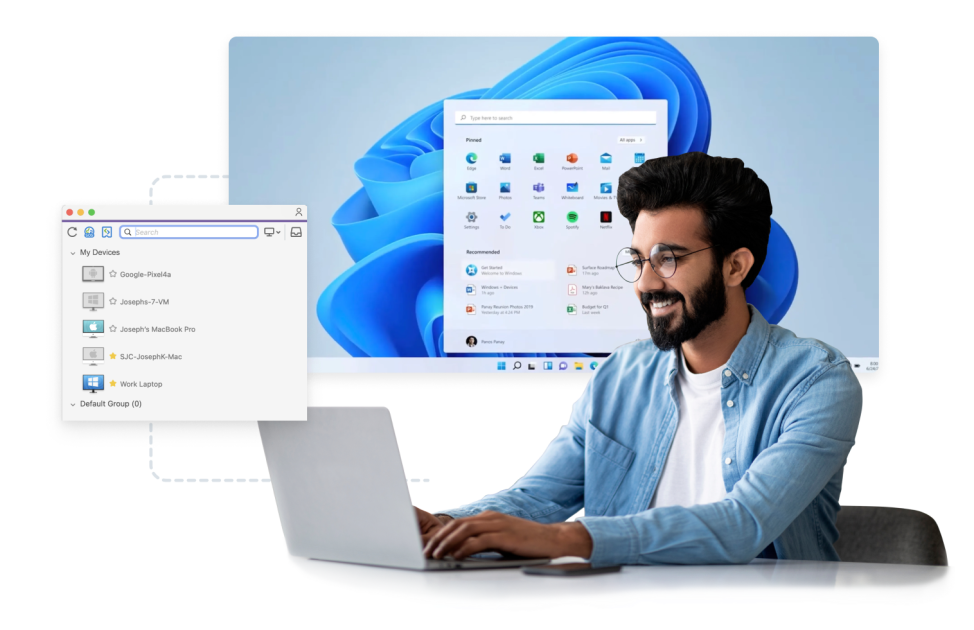
Secure remote access and support software for individuals, teams, and IT departments.
Free cross-platform remote desktop tool for work, gaming, and creative access from any device.


Google's free tool for remotely accessing a computer or sharing your screen.
Alternatives to Termius
View all →No alternatives listed yet. Browse similar tools →
The Verdict
AI-generated from listing dataRustDesk is a free, self‑hosted remote‑desktop solution ideal for IT pros who need full control and low latency, while Termius is a freemium, cloud‑synced SSH client suited for developers and ops teams needing credential vaults and mobile resilience.
Key differences
- •RustDesk provides full remote‑desktop (RDP/VNC) with multi‑monitor support; Termius focuses on SSH/Mosh terminal access only.
- •RustDesk is self‑hosted and open‑source; Termius is a closed‑source desktop app with cloud sync.
- •RustDesk is free with no paid tiers; Termius requires paid plans for team vaults, SSO, and advanced features.
- •RustDesk requires technical setup and offers limited documentation; Termius offers out‑of‑the‑box UI and cross‑device syncing but limited free collaboration.
- •RustDesk’s support is via email and GitHub Issues; Termius provides documentation and email support, with higher‑tier support options.
Pricing & value
RustDesk is completely free and open‑source; Termius has a freemium model with paid tiers for key features.
Ease of use / learning curve
Termius offers ready‑made UI and sync across devices; RustDesk needs self‑hosting and technical setup.
Features & depth
RustDesk includes full remote‑desktop, multi‑monitor, file transfer, and web UI; Termius is limited to SSH/Mosh and SFTP.
Integrations & ecosystem
Termius syncs hosts, keys, and snippets across platforms; RustDesk has no cloud sync or third‑party integrations.
Collaboration
Termius provides shared team vaults and real‑time collaboration (paid); RustDesk lacks built‑in team sharing.
Scalability
Self‑hosted RustDesk can scale by adding own servers; Termius relies on vendor cloud for sync, limited by plan.
Support
Termius offers documentation and email support; RustDesk only has email and GitHub Issues, with limited resources.
Security & privacy
RustDesk’s self‑hosted deployment keeps data on‑premises; Termius stores data in the cloud, requiring paid tier for SSO.
Migration / lock‑in
RustDesk’s open‑source code can be moved freely; Termius data is tied to its cloud service, creating lock‑in.
Choose RustDesk if…
IT admins or power users needing full remote‑desktop control and willing to manage their own server.
Choose Termius if…
Developers, sysadmins, or DevOps teams needing SSH/Mosh access with synced credentials across devices.
Common questions
Is there any cost to use RustDesk versus Termius?
RustDesk is completely free; Termius offers a free tier but charges for team vaults, SSO, and advanced features.
Can I use RustDesk without installing anything on a server?
No, RustDesk requires self‑hosting; you must deploy and configure a server before clients can connect.
Does Termius work on mobile devices without losing session state?
Yes, Termius supports Mosh, which keeps SSH sessions alive through network changes on iOS and Android.