



Dragon Quest III: The Seeds of Salvation vs Dragon Quest VIII: Journey of the Cursed King
Side-by-side comparison of features, pricing, ratings, and alternatives.
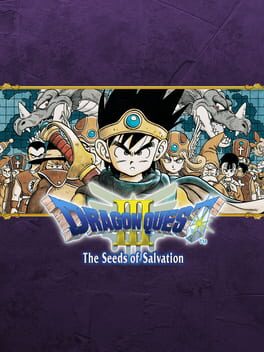
Dragon Quest III: The Seeds of Salvation is a legendary console role-playing game that expands significantly upon its predecessors with an open-world setting and robust class system. Players create a customizable party of adventurers at the local tavern, journey across a world mirroring reality, and engage in classic turn-based combat. The adventure spans multiple continents and introduces groundbreaking features such as a day/night cycle, a monster arena for betting, and the ability to change character classes mid-journey at the temple of Dhama. Ultimately, heroes must uncover the dark world of Alefgard to confront the true mastermind, Zoma, and earn the title of Erdrick.
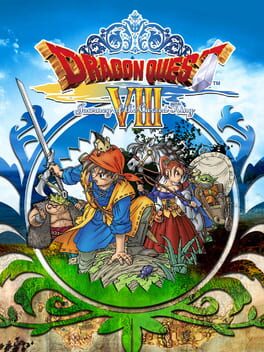
Dragon Quest VIII: Journey of the Cursed King is a classic Japanese-style role-playing game where a sole surviving castle guard, a cursed king turned into a troll, a princess turned into a horse, and a reformed bandit pursue the evil jester Dhoulmagus. Featuring fully realized 3D worlds, continuous landscapes without traditional separated world maps, and classic turn-based combat, it delivers an unforgettable grand adventure. Originally released on the PlayStation 2 and later for the Nintendo 3DS, the game combines beloved character designs by Akira Toriyama with deep tactical party management and interactive environments. Players can smash barrels, rotate cameras freely, and explore vast integrated towns, dungeons, and fields in their quest to break the dark spell cast over the kingdom of Trodain.
- Engaging class system with mid-game changes
- Expansive open world with day/night cycle
- Memorable turn-based combat mechanics
- Rich fantasy storyline leading to Alefgard
- Charming cel-shaded art style that holds up well over time
- Vast, seamless world that encourages thorough exploration
- Engaging and memorable cast of main characters
- Classic, accessible turn-based combat system
- Dated critic score metrics
- Encounter rates can feel repetitive
- Limited modern quality-of-life updates in older ports
- Random enemy encounters can feel repetitive to some modern players
- Platform availability is limited compared to modern multiplatform releases
- Grinding for levels and gold is sometimes necessary to progress
More alternatives & similar tools
Alternatives to Dragon Quest III: The Seeds of Salvation
View all →
Embark on an epic fantasy adventure as a celestial guardian retrieving sacred tree fruits.
Travel through time to save the world from an ancient destructive force in this classic JRPG.
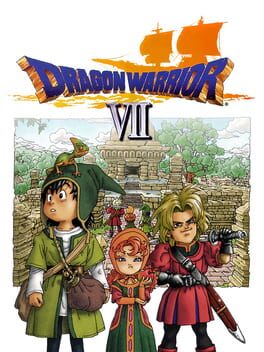
Uncover the secrets of isolated Estard and restore the world's lost past through ancient ruins.
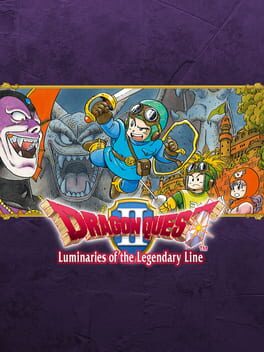
Embark on a classic fantasy RPG adventure with multiple party members.
Alternatives to Dragon Quest VIII: Journey of the Cursed King
View all →Embark on an epic fantasy adventure as a celestial guardian retrieving sacred tree fruits.
Embark on a classic fantasy RPG adventure with multiple party members.

Embark on an epic fantasy adventure across two parallel worlds in this classic RPG.
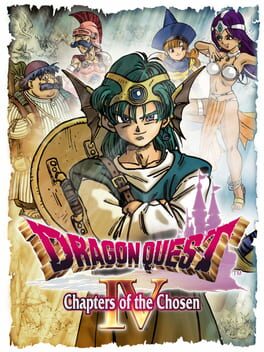
Embark on an epic chapter-driven fantasy journey to save a cursed world.
The Verdict
AI-generated from listing dataDragon Quest VIII offers a polished, visually appealing experience with seamless world and strong story, while Dragon Quest III provides deeper class customization and a larger open world but with dated presentation and a zero critic score.
Key differences
- •Art style: VIII uses lasting cel‑shaded graphics; III’s graphics are older and less refined.
- •Class system: III lets you switch classes at level 20; VIII has fixed characters.
- •World features: III includes day/night cycles, sailing, and a dark‑world segment; VIII focuses on seamless exploration without those mechanics.
- •Critical reception: VIII scored 87/100; III is listed with a 0/100 critic score.
- •Release era: VIII (2004) is newer than III (2009) but both are legacy titles with limited platform reach.
Gameplay & fun factor
III offers class switching, day/night quests, sailing, and arena betting, adding more mechanical variety.
Platform availability
Both are legacy, single‑platform releases; no specific platform list provided for either.
Price & value
VIII retails at $49.99 with a high critic score, indicating better value than III’s unspecified price and 0/100 score.
Multiplayer / co‑op
Both are single‑player only.
Content & replayability
III’s larger open world, class changes, sailing, and arena betting give more replay hooks.
Difficulty & accessibility
VIII’s classic turn‑based combat is described as accessible; III mentions repetitive encounters and limited QoL updates.
Graphics & performance
VIII’s cel‑shaded art is praised for aging well; III’s graphics are dated with no specific praise.
Choose Dragon Quest III: The Seeds of Salvation if…
Players who want deep class customization, larger world mechanics, and more varied activities.
Choose Dragon Quest VIII: Journey of the Cursed King if…
Players who prioritize polished visuals, strong story, and accessible turn‑based combat.
Common questions
Which game has better critical reception?
Dragon Quest VIII has a critic score of 87/100; Dragon Quest III is listed with a 0/100 score.
Do either of the games support multiplayer?
Both are single‑player only.
Is there any ability to change character classes in Dragon Quest VIII?
No, VIII features four fixed characters; class changes are only available in Dragon Quest III.